
Best Bioactive Substrate for Reptiles in 2026: Desert, Tropical and Snake Mixes
Affiliate disclosure: product links on this page go to Amazon, or to the maker's own store for brands that sell only direct. As an Amazon Associate we earn from qualifying purchases, at no extra cost to you; a link to a maker's store earns us nothing. No retailer or brand sees our picks before they are published or has any say in them. How we choose.
Our picks: for desert species such as bearded dragons and leopard geckos, The Bio Dude Terra Sahara; for tropical species such as crested geckos, Josh's Frogs Tropical BioBedding. Both are ready-mixed bioactive substrates whose makers publish how deep to lay them (at least 3 inches for Terra Sahara, 2.5 to 3 inches for BioBedding) and when you need a drainage layer (never for Terra Sahara; only with automatic misting for BioBedding). For snakes and other burrowers, The Bio Dude's Terra Firma is the third pick.
This guide is for keepers filling a bioactive enclosure who want to know which mix suits their animal's humidity, how much to buy and what goes under and over it. The picks are based on the makers' labels and setup instructions, with substrate cautions from VCA, the RSPCA and the Merck Veterinary Manual. A bioactive substrate is not maintenance free: both makers tell you to spot clean or stir it.
Our top picks at a glance
1. Best for desert species
The Bio Dude Terra Sahara Bioactive Substrate (36 qt)Bag size: 36 qt (also 6 and 18 qt) · Best for: Desert species, 15 to 40% humidity · Drainage layer: None needed · Depth: At least 3 in
2. Best for tropical species
Josh's Frogs Tropical BioBedding (10 qt)Bag size: 10 qt · Best for: Tropical species (not dart frogs) · Drainage layer: Only with automatic misting (2 in) · Depth: 2.5 to 3 in
3. Best for snakes and burrowers
The Bio Dude Terra Firma Bioactive Substrate (36 qt)Bag size: 36 qt (also 6 and 18 qt) · Best for: Snakes and burrowers, 50 to 75% humidity · Drainage layer: Not needed in most setups · Depth: At least 3 in
4. Best drainage layer
Riare Expanded Clay Balls (10 lb)Bag size: 10 lb · Best for: Drainage under tropical soil · Drainage layer: This is the drainage layer · Depth: 2 in (Josh's Frogs' false bottom)
5. Best leaf litter
Josh's Frogs Organic Live Oak Leaf Litter (1 gallon)Bag size: 1 gallon (about 500 leaves) · Best for: Top layer, all setups · Drainage layer: Not applicable · Depth: About 1/2 in (The Bio Dude)
| Pick | Bag size | Best for | Drainage layer | Depth | Buy |
|---|---|---|---|---|---|
| The Bio Dude Terra Sahara Bioactive Substrate (36 qt)Best for desert species | 36 qt (also 6 and 18 qt) | Desert species, 15 to 40% humidity | None needed | At least 3 in | Amazon |
| Josh's Frogs Tropical BioBedding (10 qt)Best for tropical species | 10 qt | Tropical species (not dart frogs) | Only with automatic misting (2 in) | 2.5 to 3 in | Amazon |
| The Bio Dude Terra Firma Bioactive Substrate (36 qt)Best for snakes and burrowers | 36 qt (also 6 and 18 qt) | Snakes and burrowers, 50 to 75% humidity | Not needed in most setups | At least 3 in | Amazon |
| Riare Expanded Clay Balls (10 lb)Best drainage layer | 10 lb | Drainage under tropical soil | This is the drainage layer | 2 in (Josh's Frogs' false bottom) | Amazon |
| Josh's Frogs Organic Live Oak Leaf Litter (1 gallon)Best leaf litter | 1 gallon (about 500 leaves) | Top layer, all setups | Not applicable | About 1/2 in (The Bio Dude) | Amazon |
Best for desert species
The Bio Dude Terra Sahara Bioactive Substrate (36 qt)
A ready-mixed arid substrate that holds burrows, needs no drainage layer and is made for bearded dragons, uromastyx and leopard geckos.
- Bag size
- 36 qt (also 6 and 18 qt)
- Best for
- Desert species, 15 to 40% humidity
- Drainage layer
- None needed
- Depth
- At least 3 in
Pros
- The Bio Dude says it holds a complete tunnel when kept at 25 to 40% moisture
- No drainage layer, so the full barrier height is soil
- Sold in 6, 18 and 36 quart bags; the 36-quart bag is about six 6-quart bags
Cons
- Heavy: The Bio Dude says an 18-quart bag averages 14 pounds
- The maker publishes no ingredient list
- VCA advises against sand for bearded dragons, and a desert soil mix is partly sandy; see the impaction note below
The Bio Dude makes Terra Sahara for "biomes that can get very dry and arid," names bearded dragons, uromastyx and leopard geckos, and says it holds a complete tunnel when moisture is kept at 25 to 40% (The Bio Dude). Its science page gives a humidity range of 15 to 40% and says no drainage layer is needed (The Bio Dude), and its setup guide asks for at least a 3-inch layer, soaked and squeezed to about 50% saturation, then about half an inch of leaf litter (The Bio Dude).
The 36-quart bag covers a 48 x 24 inch floor about 2.1 inches deep by our arithmetic (1 inch on that floor is about 17 dry quarts), so a 4-inch layer is four 18-quart bags or two 36s. The Bio Dude's own 4 x 2 x 2 kit ships four 36-quart bags, about 8.4 inches deep, for a deep burrowing build.
Skip it for tropical species; the BioBedding below is the humid mix.
Best for tropical species
Josh's Frogs Tropical BioBedding (10 qt)
A tropical bioactive mix for crested geckos, tree frogs and tropical snakes, with clear depth and drainage rules from the maker.
- Bag size
- 10 qt
- Best for
- Tropical species (not dart frogs)
- Drainage layer
- Only with automatic misting (2 in)
- Depth
- 2.5 to 3 in
Pros
- Josh's Frogs gives exact instructions: depth, water and when to add drainage
- No drainage layer needed with light or hand misting
- Blend of organic and inorganic ingredients with beneficial fungi, per the maker
Cons
- 10-quart bags mean several for a large enclosure
- Josh's Frogs does not recommend it for dart frogs or anything needing high humidity and low ventilation
- The maker gives no itemized ingredient list
Josh's Frogs describes Tropical BioBedding as "a unique blend of organic and inorganic ingredients, trace elements, and beneficial fungi" and recommends it for crested geckos, tree frogs, bumblebee toads, mantellas, water dragons and tropical snakes (Josh's Frogs). The instructions are to mix the bag, add dechlorinated or RO water until it holds together when squeezed with no water running out, and lay 2.5 to 3 inches. It needs no drainage layer with light or hand misting; with automatic misting, Josh's Frogs calls for a 2-inch false bottom and a substrate barrier underneath.
Josh's Frogs also says to stir the surface every 1 to 2 weeks and replace the bedding after several years, once it breaks down. That fits the RSPCA's advice for crested geckos: substrates that hold humidity, such as coir or a mixed soil, covered with moss or leaves (RSPCA).
Skip it for desert species and for very wet, low-ventilation setups, which Josh's Frogs itself rules out.
Best for snakes and burrowers
The Bio Dude Terra Firma Bioactive Substrate (36 qt)
A bioactive mix for ball pythons, boas and other burrowers in warm enclosures with humidity spikes, with no drainage layer most of the time.
- Bag size
- 36 qt (also 6 and 18 qt)
- Best for
- Snakes and burrowers, 50 to 75% humidity
- Drainage layer
- Not needed in most setups
- Depth
- At least 3 in
Pros
- The Bio Dude says it holds burrows and tunnels and retains water without a drainage layer
- Names ball pythons, boa constrictors, fat-tailed geckos and tropical tegus among its species
- Same bag sizes as Terra Sahara
Cons
- The maker says very humid enclosures may need a porous drainage layer under it
- No ingredient list published
- Heavy and bulky to ship in the larger bags
The Bio Dude designs Terra Firma for terrestrial reptiles "such as monitors, snakes, tortoises, and other burrowing species" in biomes that get hot with minor humidity spikes, and says it holds burrows and tunnels without a drainage layer (The Bio Dude). Its science page lists ball pythons, chameleons, boa constrictors, fat-tailed geckos and tropical tegus, gives a humidity range of 30 to 80% with 80% as spikes only, and says it works best at 50 to 75%. Drainage is not needed "90% of the time"; in very high humidity enclosures the maker suggests a porous drainage layer, never loose rock.
The setup guide asks for at least 3 inches, soaked and squeezed until saturated but not dripping, then half an inch of leaf litter (The Bio Dude). The RSPCA advises against sand alone for corn snakes and royal pythons because it can irritate their skin (RSPCA), which a soil mix like this avoids.
Skip it for desert lizards; Terra Sahara is the arid version.
Best drainage layer
Riare Expanded Clay Balls (10 lb)
Expanded clay balls for the 2-inch false bottom that tropical, automatically misted builds need.
- Bag size
- 10 lb
- Best for
- Drainage under tropical soil
- Drainage layer
- This is the drainage layer
- Depth
- 2 in (Josh's Frogs' false bottom)
Pros
- Natural clay pellets of about 4 to 16 mm, in a resealable bag (per the listing)
- Lightweight and rinsable, per the listing
- pH neutral, per the listing
Cons
- Needs a mesh barrier on top so soil does not wash into it
- Not needed under Terra Sahara or, in most setups, Terra Firma
- Sold by weight, so you have to estimate volume
A drainage layer is a reservoir under the soil that catches excess water. Josh's Frogs calls for a 2-inch false bottom and a substrate barrier under its BioBedding only when you mist automatically, and The Bio Dude says its HydroGrow clay drainage must be used with a screen divider (The Bio Dude). The Bio Dude's own HydroGrow V2 is the branded option; these Riare expanded clay balls are the same idea, natural clay pellets of about 4 to 16 mm sold by the 10-pound bag (per the Amazon listing).
Skip it for a desert build. The Bio Dude says no drainage layer is needed for Terra Sahara, and the Merck Veterinary Manual warns that gravel and pebbles are hard to clean and can cause gastrointestinal obstruction if a terrestrial reptile eats them, so keep drainage media under a barrier, never on top (Merck).
Best leaf litter
Josh's Frogs Organic Live Oak Leaf Litter (1 gallon)
US-collected oak leaves for the top layer: food and cover for the cleanup crew in any bioactive build.
- Bag size
- 1 gallon (about 500 leaves)
- Best for
- Top layer, all setups
- Drainage layer
- Not applicable
- Depth
- About 1/2 in (The Bio Dude)
Pros
- Collected, dried and hand packed in the USA, per the listing
- Small leaves that fill corners in small enclosures
- Feeds and shelters isopods and springtails as it breaks down
Cons
- Breaks down and needs topping up: The Bio Dude puts it at 2 to 3 months in tropical setups and 3 to 4 in arid
- One gallon covers a small enclosure; a 4 x 2 needs more
Leaf litter is the top layer and the cleanup crew's food. The Bio Dude seeds a new enclosure with "a generous 1/2 inch layer" and says biodegradables break down in about 2 to 3 months in tropical setups and 3 to 4 months in arid ones, so you add more as it goes. Josh's Frogs' live oak litter is collected, dried and hand packed in the USA and sold by the gallon, about 500 leaves (per the Amazon listing).
The Merck Veterinary Manual says natural leaf litter, soil and sand can be used in reptile enclosures but recommends oven baking them first to sterilize them, which is the reason to buy cleaned, packaged leaves rather than gathering them from the yard.
How we chose
We looked for ready-mixed bioactive substrates whose makers publish who the mix is for, how deep to lay it and whether it needs a drainage layer, because those three answers decide whether a build works. Then we added the two supporting layers almost every build uses: drainage media for wet tropical setups and leaf litter for the top.
Match the substrate to the humidity
| Substrate | Humidity it is made for | Minimum depth | Drainage layer | Bag sizes |
|---|---|---|---|---|
| The Bio Dude Terra Sahara | 15 to 40% | 3 in | Not needed | 6, 18, 36 qt |
| The Bio Dude Terra Firma | 30 to 80% (best at 50 to 75%) | 3 in | Not needed in most setups | 6, 18, 36 qt |
| Josh's Frogs Tropical BioBedding | Tropical (not high humidity, low ventilation) | 2.5 to 3 in | 2 in, only with automatic misting | 10 qt |
For a species-level check, the Merck Veterinary Manual lists humidity of 20 to 30% for bearded dragons and leopard geckos and 50 to 80% for ball pythons, and the RSPCA gives 30 to 40% for leopard geckos and bearded dragons and 40 to 50% for crested geckos (Merck; RSPCA). Terra Sahara fits the desert group, Terra Firma the ball python, and BioBedding the crested gecko.
How much to buy
On a 48 x 24 inch floor, each inch of depth is about 17 dry quarts (our arithmetic from the US dry quart of 67.2 cubic inches), so a 4-inch layer is about 69 quarts. Measure the inside of your enclosure and use our bioactive substrate calculator, which also works out the drainage layer. Check that your planned depth fits under the enclosure's substrate barrier; our best bioactive enclosures guide lists each one's depth.
Mixing your own
The RSPCA gives two simple mixes: about 50% organic soil and 50% sand for leopard geckos (RSPCA), and 60% soil, 30% sand and 10% leaves for corn snakes (RSPCA). A packaged soil such as Zoo Med ReptiSoil, a blend of humus, peat moss, sand and carbon that Zoo Med sells for bioactive and tropical setups (Zoo Med), can be the soil part. The Merck Veterinary Manual recommends oven baking any soil, sand or leaf litter you collect yourself.
The sand and impaction question
The sources disagree. VCA says not to use sand, gravel, wood shavings, corncob, walnut shells or cat litter for bearded dragons, and that even calcium sand can cause impactions (VCA), and it says never to use coarse sand, corncob or crushed walnut for leopard geckos (VCA). The RSPCA recommends clean children's play sand for bearded dragons and a soil and sand mix for leopard geckos, while warning against calcium sand and loose bark, wood chips, walnut and corncob (RSPCA). Both warn against calcium sand, corncob and crushed walnut. If your animal eats substrate, or has a history of gut problems, ask a reptile veterinarian before you use any loose mix.
What to skip
- A drainage layer under a desert mix. The Bio Dude says Terra Sahara needs none, and it takes height away from the soil.
- Drainage media without a barrier. The Bio Dude says its clay drainage must be used with a screen divider.
- Gravel or pebbles as a surface layer for terrestrial species. The Merck Veterinary Manual says they are hard to clean and can cause obstruction if eaten.
- Expecting it to run itself. The Bio Dude says to spot clean where the animal defecates, and Josh's Frogs says to stir the surface every 1 to 2 weeks.
Step-by-step layering is in our guide to setting up a bioactive enclosure, and the isopods and springtails that live in it are covered in the cleanup crew guide.
Frequently asked questions
What is the best bioactive substrate for a bearded dragon?
An arid mix made for desert species, such as The Bio Dude's Terra Sahara, which the maker says is for bearded dragons, uromastyx and leopard geckos, needs no drainage layer and should be at least 3 inches deep. VCA advises against sand for bearded dragons, so ask a reptile veterinarian if your dragon eats substrate.
What is the best bioactive substrate for a crested gecko?
A tropical mix such as Josh's Frogs Tropical BioBedding, which the maker recommends for crested geckos at 2.5 to 3 inches deep. The RSPCA suggests substrates that hold humidity, such as coir or a mixed soil, topped with moss or leaves.
Do I need a drainage layer in a bioactive enclosure?
Not always. The Bio Dude says Terra Sahara needs none and Terra Firma needs none in most setups, and Josh's Frogs says BioBedding needs a 2-inch false bottom and a barrier only with automatic misting. Where you do use one, cover it with a mesh barrier.
How deep should bioactive substrate be?
The makers' minimums are at least 3 inches for The Bio Dude's Terra Sahara and Terra Firma and 2.5 to 3 inches for Josh's Frogs BioBedding, plus about half an inch of leaf litter on top. Deeper beds suit burrowing species if your enclosure's substrate barrier is tall enough.
How many quarts of substrate do I need for a 4x2x2?
About 17 dry quarts for every inch of depth on a 48 x 24 inch floor, so a 4-inch layer is about 69 quarts, or four 18-quart bags. The inside floor is a little smaller than the nominal size, so measure inside and use our substrate calculator.
How often do you change bioactive substrate?
Rarely, but it is not left alone. Josh's Frogs says to stir the surface every 1 to 2 weeks and replace BioBedding after several years once it breaks down, and The Bio Dude says to spot clean where the animal defecates and add leaf litter as it breaks down.
Sources
- Terra Sahara Bioactive Substrate 18 qt bag, The Bio Dude
- The Science of Terra Sahara, The Bio Dude
- The Science of Terra Firma, The Bio Dude
- How do I create a Terra Sahara BioActive Vivarium?, The Bio Dude
- Josh's Frogs TROPICAL BioBedding Bioactive Substrate (10 quarts), Josh's Frogs
- ReptiSoil, Zoo Med Laboratories
- Management and Husbandry of Reptiles, Merck Veterinary Manual
- Bearded Dragons - Housing, VCA Animal Hospitals
- How To Care For Your Bearded Dragon, RSPCA
- How To Care For a Leopard Gecko, RSPCA
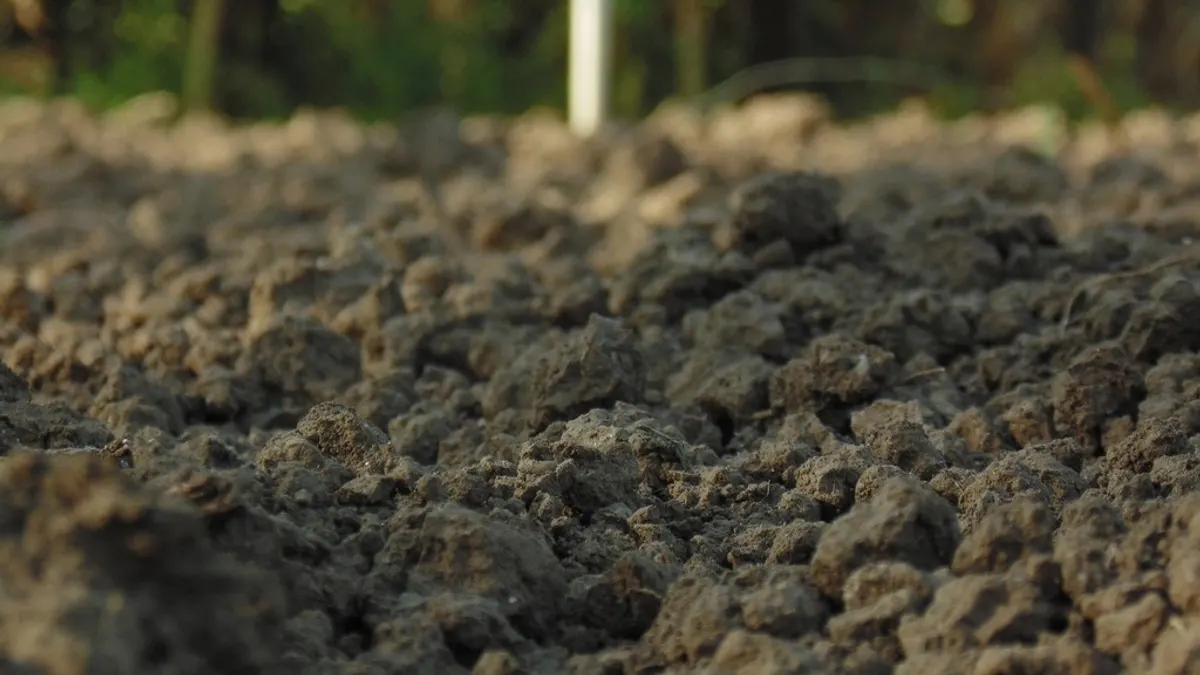
Cover photo: Soil ground close up, CC0 1.0, via rawpixel. Cropped.
Related guides
Best Bioactive Reptile Enclosures of 2026: Deep Bases, Liners and Sizes
Five enclosures that hold a deep, damp soil bed, compared on base depth, waterproofing and size.
Bioactive Cleanup Crew Guide: Springtails and Isopods Explained
Springtails and isopods: what each eats, what they need, and what they will not do for you.
How to Set Up a Bioactive Enclosure: Layers, Depths and the First Week
Each layer, how deep to lay it, when you can skip drainage, and the upkeep a bioactive enclosure still needs.