
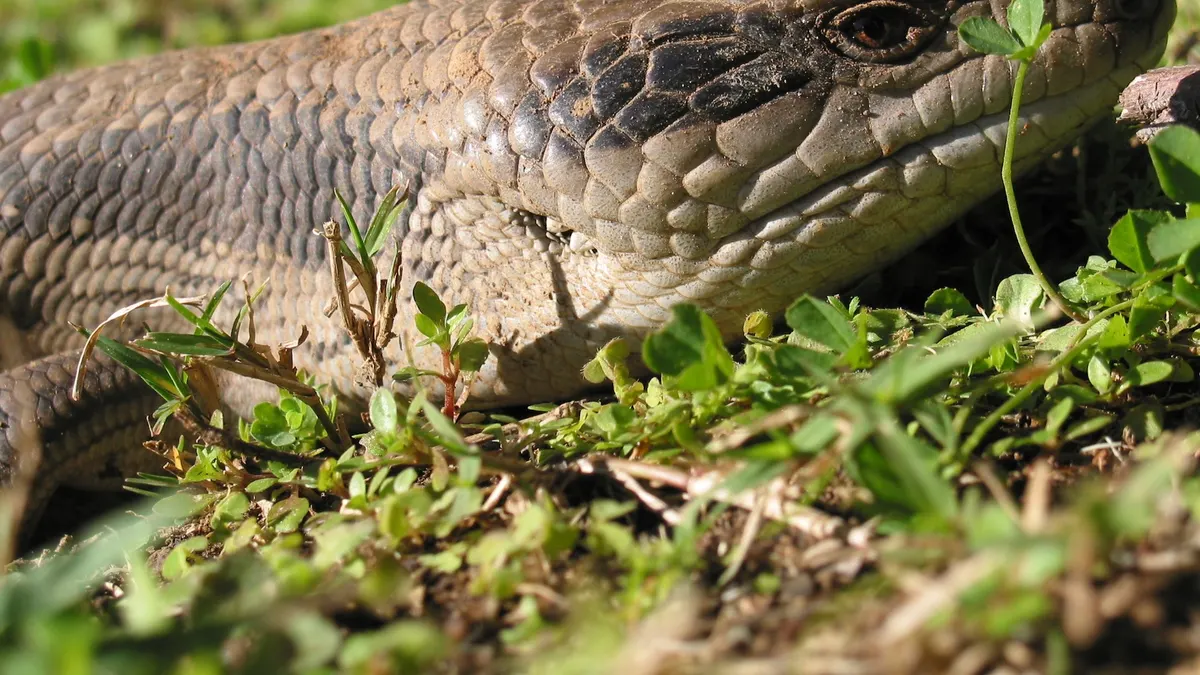
Blue-Tongued Skink Enclosure Setup: Size, Heat, UVB and Substrate
Affiliate disclosure: product links on this page go to Amazon, or to the maker's own store for brands that sell only direct. As an Amazon Associate we earn from qualifying purchases, at no extra cost to you; a link to a maker's store earns us nothing. No retailer or brand sees our picks before they are published or has any say in them. How we choose.
An adult blue-tongued skink needs an enclosure at least 120 to 180 cm (4 to 6 feet) long and about 45 to 60 cm (18 to 24 inches) high, per the Australian exotic-animal clinic Unusual Pet Vets, so a 4x2x2 foot enclosure is the minimum and a 6x2x2 is better. Give it a basking spot of 33 to 38°C (92 to 100°F), a warm end of 28 to 33°C (82 to 90°F) and a cool end of 21 to 26°C (70 to 80°F), real UVB with nothing but air between lamp and skink, a hide at each end and a substrate it can dig in. Every heater runs through a thermostat. There are several kinds of blue-tongued skink, and the clinic stresses that care differs by subspecies.
The setup at a glance
| What | Target | Source |
|---|---|---|
| Enclosure, one adult | 120 to 180 cm (4 to 6 ft) long, 45 to 60 cm (1.5 to 2 ft) high, larger is ideal | Unusual Pet Vets |
| Floor area | 0.2 square meters per 10 cm of total length (terrestrial lizards) | Merck Veterinary Manual |
| Adult length (Tiliqua scincoides scincoides) | About 45 cm, up to 60 cm | Unusual Pet Vets |
| Basking spot | 33 to 38°C (92 to 100°F) | Unusual Pet Vets |
| Basking surface | 35 to 45°C (95 to 113°F) | Baines et al. 2016 (UV-Tool) |
| Warm end | 28 to 33°C (82 to 90°F) | Unusual Pet Vets |
| Cool end | 21 to 26°C (70 to 80°F) | Unusual Pet Vets |
| Day air, summer | 28 to 32°C (82 to 90°F) | Baines et al. 2016 |
| Night air, summer | 20 to 24°C (68 to 75°F) | Baines et al. 2016 |
| Ferguson zone (eastern blue-tongue) | 2 to 3 | Baines et al. 2016 |
| Light cycle | 12 hours light, 12 hours dark | Unusual Pet Vets |
Enclosure size
Blue-tongued skinks live on or near the ground; the UV-Tool paper lists rocks and crevices, shrubs and grassland as the eastern blue-tongue's microhabitat. Unusual Pet Vets says an adult's enclosure should measure no less than 120 to 180 cm long and around 45 to 60 cm high, larger if possible, well ventilated, secure and out of drafts, and made of materials that do not absorb moisture. The Merck Veterinary Manual asks for 0.2 square meters of floor per 10 cm of total length; for a 45 to 60 cm skink that is 0.9 to 1.2 square meters (9.7 to 12.9 square feet).
| Enclosure | Floor area | Unusual Pet Vets range | Merck figure covers up to |
|---|---|---|---|
| 4 x 2 x 2 ft | 8 sq ft (0.74 m²) | Meets the 120 cm low end | About 37 cm skink |
| 5 x 2 x 2 ft | 10 sq ft (0.93 m²) | Inside the range | About 46 cm skink |
| 6 x 2 x 2 ft | 12 sq ft (1.11 m²) | Meets the 180 cm high end | About 55 cm skink |
A 4x2x2 is the floor; a 6x2x2 meets both sources for most adults. Unusual Pet Vets says skinks should be housed alone, because even juveniles fight and can badly injure each other. Our size guide and PVC enclosure picks cover the 4 to 6 foot sizes.
Heat and the temperature gradient
Unusual Pet Vets gives a preferred optimal temperature zone of 28 to 33°C, built as a gradient: a cool end of 21 to 26°C, a warm end of 28 to 33°C and a basking spot of 33 to 38°C. The UV-Tool paper by Baines and colleagues lists a hotter basking surface, 35 to 45°C, for the eastern blue-tongue, with day air at 28 to 32°C in summer and nights at 20 to 24°C.
The clinic is firm on control: a thermostat must be used with all heating elements, thermometers should sit in several places and be checked regularly, and an infrared thermometer helps map the gradient. Under-tank heating can work in some enclosures, but always on a thermostat and with air circulating around the element to prevent overheating and fire. An overhead halogen on a dimming thermostat is the simpler way to build a basking spot; see our heat lamp guide.
UVB lighting
Unusual Pet Vets recommends full-spectrum lighting with UVB and says UVB must be both available and accessible: positioned over the basking area, at a distance where it still reaches the skink, with no glass or plastic in the way. It warns that some screens block and reflect up to 80% of usable UV, and that too much UV has been linked to eye inflammation and skin disease, so follow the lamp maker's distance guidance. The UV-Tool paper places the eastern blue-tongue in Ferguson zone 2 to 3; zone 3's recommended UV index range is 1.0 to 2.6, with a maximum of 2.9 to 7.4 at the closest point.
Replace the tube every 6 to 12 months depending on the maker's recommendation, or measure its output with a radiometer, per the clinic. Our Ferguson zones guide explains how to set the distance for a zone.
Humidity
The veterinary sources used here do not give a humidity percentage for blue-tongued skinks. Unusual Pet Vets says good ventilation is essential to manage air circulation, temperature and humidity, and that keepers should research the subspecies they keep, because care differs between them. Measure with a hygrometer and ask a reptile veterinarian what range suits your animal's type.
Substrate
Unusual Pet Vets lists the trade-offs. Sand, peat, bark, leaf litter, recycled paper pellets and critter crumbles are all used but tend to have problems absorbing water and can be hard to clean. Newspaper, butcher's paper and paper towels are easy to clean and carry no obstruction risk, but do not allow digging and hold humidity poorly. Aspen, hemp or vermiculite hold humidity well and spot clean easily. It also suggests a rough surface, such as a slate tile, in part of the enclosure to help keep the claws from overgrowing, a common problem it sees.
Hides and furniture
The clinic suggests hollowed-out logs, purpose-built containers, paper towel rolls or PVC tubing as hides, plus branches and rocks to help with shedding, all secured so nothing can fall on the skink, and warns against overcrowding the enclosure. Put a hide at each end so it can pick its temperature without leaving cover. Large caves and cork logs are compared in our hide guide.
Shopping list
| Item | What to look for | Example |
|---|---|---|
| Enclosure | 4x2x2 minimum, 6x2x2 ideal, moisture-resistant panels | Zen Habitats 6x2x2 PVC or Phailozoo 120 Gallon 4x2x2 |
| Basking lamp | Halogen flood, guarded | Arcadia Optimal Heating Pack (75W halogen flood plus 50W deep heat projector) |
| Thermostat | Dimming type for the lamp | REPTI ZOO Dimming Thermostat (TC02) |
| UVB | T5 tube and reflector sized for Ferguson zone 2 to 3 | Zoo Med ReptiSun T5 HO Hood with 10.0 Lamp, 24 in, set at the distance that keeps the basking spot inside zone 3 |
| Thermometers | Digital thermometers in several places, plus an infrared thermometer | Govee H5075 and Etekcity Lasergrip 774 |
| Hides | Two large hides or hollow logs, big enough to cover the whole skink | Zoo Med Natural Cork Bark Round, Extra Large (check the opening against your animal) |
| Rough surface | A slate tile under the basking area | Any natural slate tile |
Setup checklist
- Assemble the enclosure out of drafts, on a stand rated for the weight with substrate.
- Fit the guarded basking lamp and UVB tube over one end, with no glass or plastic in the path.
- Wire the lamp through the thermostat and run the enclosure until the basking spot, warm end and cool end sit in range.
- Add substrate, a slate tile, a hide at each end and a heavy water bowl.
Unusual Pet Vets recommends cleaning and disinfecting the enclosure regularly, naming F10SC at a 1:250 dilution with at least 15 minutes of contact time, after removing all debris. Our cleaning guide covers that and other products. Diet is beyond this guide; ask a reptile veterinarian.
Frequently asked questions
What size enclosure does a blue-tongued skink need?
Unusual Pet Vets says an adult needs at least 120 to 180 cm (4 to 6 feet) of length and about 45 to 60 cm of height, with larger being ideal. The Merck Veterinary Manual's floor formula gives 0.9 to 1.2 square meters for a 45 to 60 cm skink, so a 6x2x2 foot enclosure is the better choice.
What temperature does a blue-tongued skink need?
Unusual Pet Vets gives a basking spot of 33 to 38°C (92 to 100°F), a warm end of 28 to 33°C (82 to 90°F) and a cool end of 21 to 26°C (70 to 80°F). The 2016 UV-Tool paper lists a basking surface of 35 to 45°C for the eastern blue-tongue. Use a thermostat on every heater.
Do blue-tongued skinks need UVB?
Yes. Unusual Pet Vets recommends full-spectrum lighting with UVB placed over the basking area with no glass or plastic in between, replaced every 6 to 12 months or checked with a radiometer. The 2016 UV-Tool paper places the eastern blue-tongue in Ferguson zone 2 to 3.
Can blue-tongued skinks live together?
No. Unusual Pet Vets says blue-tongued skinks should be housed alone, and that even juveniles are known to fight and cause severe injury to each other.
Is a 40 gallon tank big enough for a blue-tongued skink?
No. A 40 gallon breeder-style tank with a 36 inch length is below the 120 cm (4 foot) minimum length that Unusual Pet Vets gives for an adult. Plan on 4 feet at the very least and 6 feet if you can.
What is the best substrate for a blue-tongued skink?
There is no single answer. Unusual Pet Vets says paper is easy to clean and safe but does not allow digging, while aspen, hemp or vermiculite hold humidity well and spot clean easily. It also suggests a slate tile to help wear down the claws.
Sources
- Caring for Blue-Tongued Skinks, Unusual Pet Vets
- Management and Husbandry of Reptiles, Merck Veterinary Manual
- How much UV-B does my reptile need? The UV-Tool, a guide to the selection of UV lighting for reptiles and amphibians in captivity, Journal of Zoo and Aquarium Research
- 6'x2'x2' PVC Reptile Enclosure - The Zen Habitat 3.0, Zen Habitats
Cover photo: Tiliqua scincoides scincoides by Sofia Zvolanek, CC BY 4.0, via inaturalist. Cropped.
Related guides
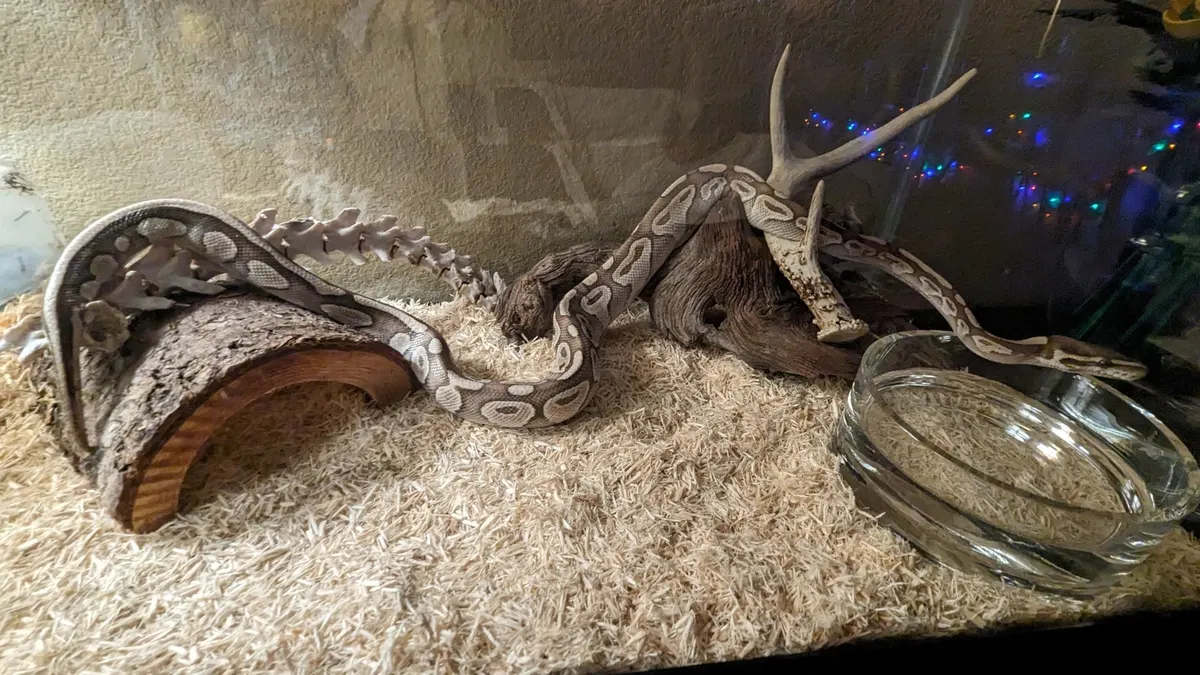
Ball Python Enclosure Setup: Size, Heat, Humidity and Hides
Length to match the snake, a 30 to 32°C warm end, 50 to 60% humidity and tight, dark hides at both ends: the ball python setup with its sources.
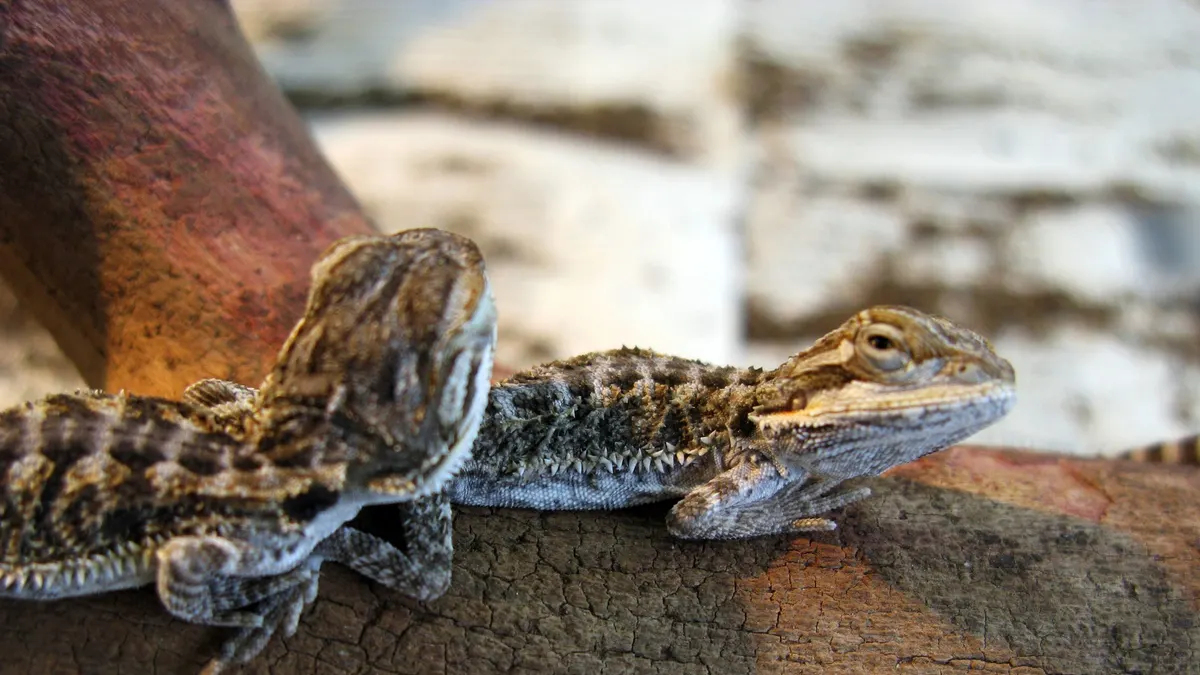
Bearded Dragon Enclosure Setup: Size, Heat, UVB and Substrate
A 4x2x2 minimum, a 100 to 108°F basking spot, a UV index of 3 to 5 under the lamp and a dry cool end: the setup, figure by figure, with sources.
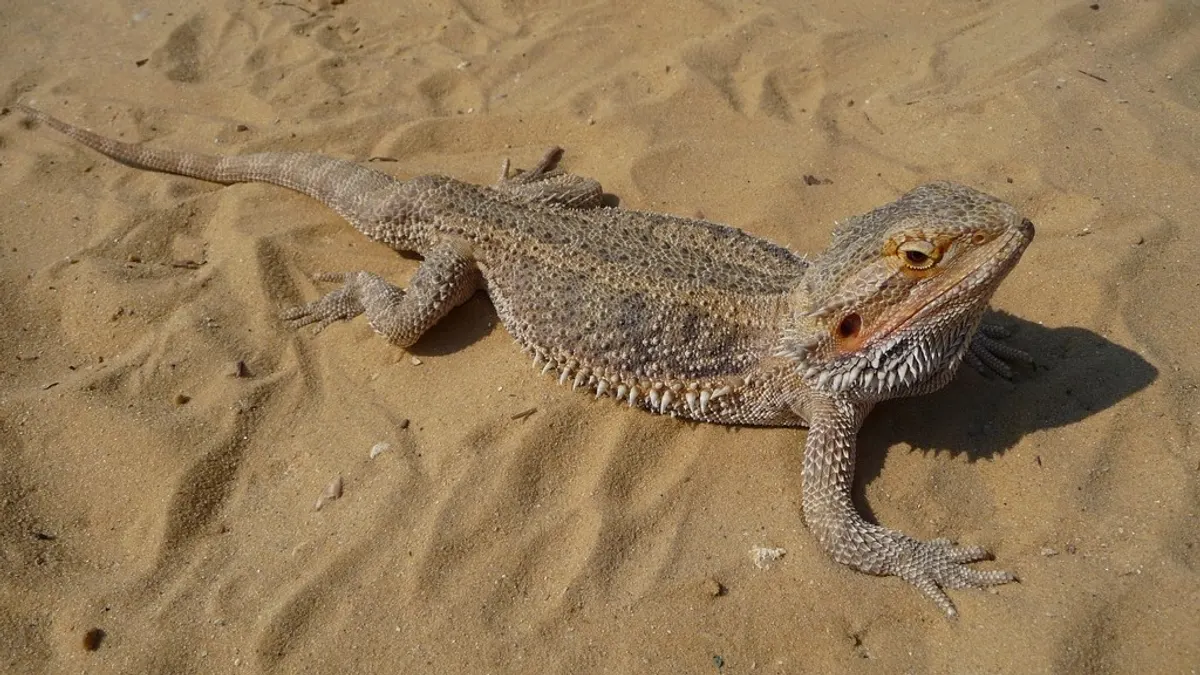
Best Bearded Dragon Enclosures of 2026: 4x2x2 and Bigger
A 4x2x2 is the floor for one adult bearded dragon. These are the enclosures that meet it, and the ones that go past it.