
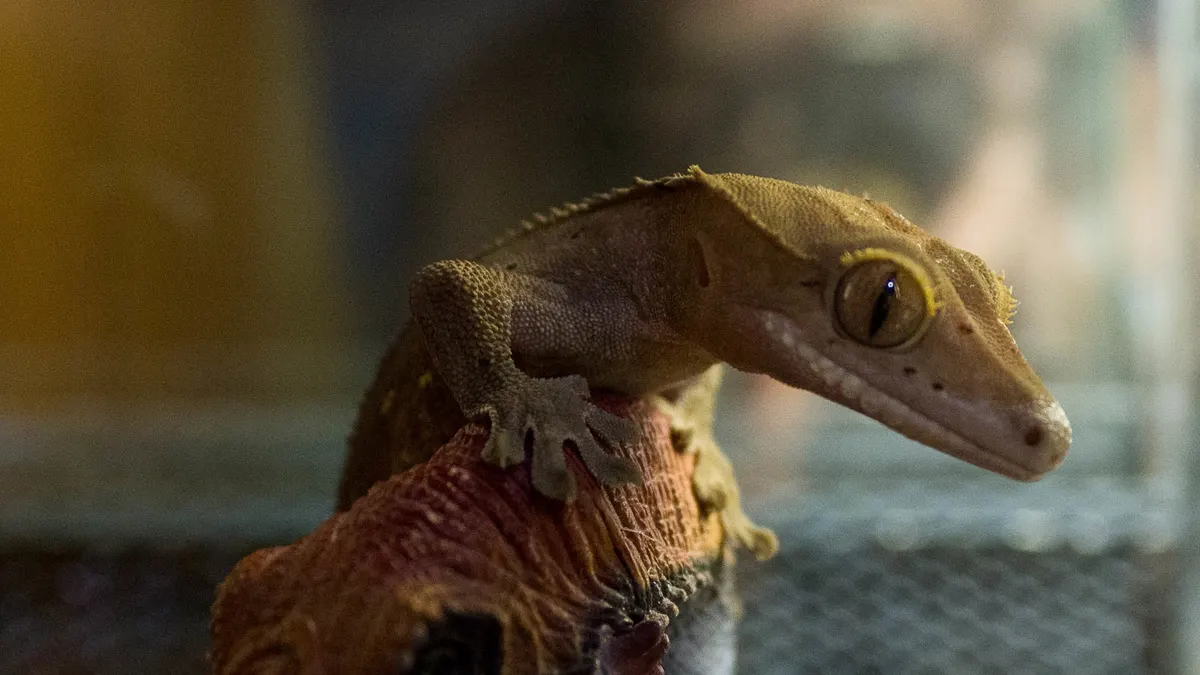
Crested Gecko Enclosure Setup: Size, Temperature, Humidity and UVB
Affiliate disclosure: product links on this page go to Amazon, or to the maker's own store for brands that sell only direct. As an Amazon Associate we earn from qualifying purchases, at no extra cost to you; a link to a maker's store earns us nothing. No retailer or brand sees our picks before they are published or has any say in them. How we choose.
An adult crested gecko needs a tall enclosure of at least 45 x 45 x 60 cm (about 18 x 18 x 24 inches), the minimum used by the Royal Veterinary College's exotics service, with branches and plants to climb. Keep the basking area around 28°C (82°F), the cool end around 25°C (77°F) and nights no lower than about 20°C (68°F), hold humidity at 50 to 70% with regular misting, and fit a low-output UVB lamp. Every heater runs through a thermostat. The figures below come from two veterinary practices and a zoo lighting paper, and where they differ, both are shown.
The setup at a glance
| What | Target | Source |
|---|---|---|
| Enclosure, one adult | 45 x 45 x 60 cm minimum, as large as possible | RVC Beaumont Sainsbury Animal Hospital |
| Enclosure, one adult | Tall glass, at least 20 gallons | Long Island Bird & Exotics Veterinary Clinic |
| Basking area | About 28°C (82°F) | RVC |
| Cool end | About 25°C (77°F) | RVC |
| Overall range | 72 to 80°F (22 to 27°C) | Long Island Bird & Exotics |
| Day air, summer | 25 to 28°C (77 to 82°F) | Baines et al. 2016 (UV-Tool) |
| Night | Not below about 20°C (68°F) | RVC |
| Humidity | 50 to 70% | RVC |
| Humidity | 60 to 80% | Long Island Bird & Exotics |
| UVB | Low-output lamp (for example 6%), about 12 hours a day | RVC |
| Ferguson zone | 1 (crepuscular or shade dweller) | Baines et al. 2016 |
Enclosure size and shape
Crested geckos climb. The UV-Tool paper by Baines and colleagues lists the species' microhabitat as arboreal, and both veterinary sources ask for a tall enclosure. The RVC's exotics service recommends a minimum of 45 x 45 x 60 cm and says to provide as large an enclosure as possible, so there is room to climb and to form a temperature gradient. It notes glass enclosures with mesh tops are typically used. Long Island Bird & Exotics asks for a tall glass enclosure of at least 20 gallons for one adult.
An 18 x 18 x 24 inch front-opening terrarium meets the RVC minimum. A 24 x 18 x 36 inch terrarium gives a third more floor and 12 more inches of height to climb. The Merck Veterinary Manual sizes arboreal lizards by volume rather than floor area, which is another argument for height. Our glass terrarium picks list the tall sizes.
The RVC says that in general the happiest lizard is a solitary one; plan on one gecko per enclosure.
Heat and temperature
Crested geckos need gentle warmth, not a hot basking spot. The RVC uses a light-emitting spot bulb to give a basking temperature of about 28°C, on for at least 12 hours a day and off at night, with the cool end around 25°C. Background heat, if the room runs cold, comes from a heat mat on the back wall, a tubular heater, a heat plate or a ceramic bulb on a thermostat set so the temperature does not drop below about 20°C overnight.
The RVC states that heat sources must be attached to a thermostat and checked with a digital maximum and minimum thermometer so the enclosure does not overheat, and that heaters should be guarded. Long Island Bird & Exotics gives a range of 72 to 80°F and suggests a low-wattage overhead bulb or an under-tank heater on the side of the enclosure. Measure your room's temperature before choosing a heater.
Humidity and misting
This is the main daily job. The RVC says humidity should be checked with a hygrometer and kept at 50 to 70%, by spraying at regular intervals or with a substrate that holds moisture. Long Island Bird & Exotics aims higher, at 60 to 80%, by misting regularly or with an automatic misting system. The overlap, 60 to 70%, satisfies both. Give the gecko a water container as well; the RVC says water should always be available and changed daily. Automatic misters are compared in our misting system picks.
UVB lighting
The RVC says crested geckos, despite being active at dawn and dusk, appear to benefit from UVB, and recommends a low-output lamp (for example 6%) on for about 12 hours a day at the distance the manufacturer recommends, replaced on the maker's schedule or checked for output. Long Island Bird & Exotics strongly recommends UVB and says to replace bulbs every six months. The UV-Tool paper places crested geckos in Ferguson zone 1, with a recommended UV index range of 0 to 0.7 and a maximum of 0.6 to 1.4 at the closest point. Plants and branches under the lamp give the gecko shade to retreat into. See our UVB lamp guide for low-output tubes.
Substrate
The two veterinary sources differ. The RVC says paper towels or newspaper work in the short term but do not allow natural behaviors, and suggests more natural substrates, such as soil and sand mixes, for long-term housing, taking care not to feed on the substrate. Long Island Bird & Exotics prefers paper towels or reptile carpet and advises avoiding loose substrates such as soil or sand because of impaction risk. A moisture-holding soil also helps humidity; if you go that way, a bioactive build is covered in our bioactive setup guide. Ask a reptile veterinarian if your gecko is young or unwell.
Hides, branches and plants
The RVC asks for hides at both the warm and cool ends, one containing damp moss or kitchen towel for shedding, and lists artificial plants, cardboard boxes, plant pots, logs or commercial hides. Long Island Bird & Exotics notes that live or artificial plants provide both climbing and hiding. The Merck Veterinary Manual says clean, secure branches are required for arboreal species and lists cork bark among suitable retreats, so a cork tube fixed up the wall gives a hide off the ground. Our hide guide compares cork and ceramic options.
Shopping list
| Item | What to look for | Example |
|---|---|---|
| Enclosure | 18 x 18 x 24 in minimum, front opening, mesh top | REPTI ZOO 24 x 18 x 36 in glass terrarium |
| Roomier option | Tall PVC holds humidity | Zen Habitats 2x2x4 PVC |
| Low heat | Low-wattage bulb on a dimming thermostat | Arcadia Halogen Heat Lamp, 35W on a REPTI ZOO Dimming Thermostat (TC02) |
| UVB | Low-output tube (around 6%) | Arcadia LumenIZE ShadeDweller 7% kit, 8W |
| Thermometer and hygrometer | Digital, at mid-height | Govee H5075 |
| Misting | Hand sprayer or an automatic mister | MistKing Starter Misting System |
| Hides | Cork tube up high, plus a humid hide | Zoo Med Natural Cork Bark Round and Zoo Med Repti Shelter 3-in-1 |
Setup checklist
- Set the enclosure where room temperature is steady, then fit the lamp and UVB on the mesh top over one side.
- Wire the heat source through the thermostat and check it with a max/min thermometer for a few days before adding the gecko.
- Add substrate, a hide at each end (one humid), and branches and plants from floor to top.
- Mist and watch the hygrometer; adjust misting until humidity sits between 50 and 70%.
Spot clean waste as soon as it appears and clean fully once a month with a reptile-safe disinfectant, per the RVC; our cleaning guide covers products. Diet is beyond this guide; ask a reptile veterinarian.
Frequently asked questions
What size enclosure does a crested gecko need?
The Royal Veterinary College's exotics service recommends a minimum of 45 x 45 x 60 cm, about 18 x 18 x 24 inches, and says larger is better. Long Island Bird & Exotics Veterinary Clinic asks for a tall glass enclosure of at least 20 gallons for one adult.
What temperature should a crested gecko tank be?
The RVC gives a basking temperature of about 28°C (82°F), a cool end of about 25°C (77°F) and nights no lower than about 20°C (68°F). Long Island Bird & Exotics gives 72 to 80°F. Run any heater through a thermostat so the enclosure cannot overheat.
What humidity does a crested gecko need?
The RVC says 50 to 70%, reached by misting or a moisture-holding substrate. Long Island Bird & Exotics aims for 60 to 80%. Keeping it between 60 and 70% satisfies both, checked with a digital hygrometer.
Do crested geckos need UVB?
The RVC says crested geckos appear to benefit from UVB and recommends a low-output lamp, for example 6%, for about 12 hours a day. Long Island Bird & Exotics strongly recommends UVB. The 2016 UV-Tool paper places them in Ferguson zone 1, the shade dwellers.
Do crested geckos need a heat lamp?
The RVC uses a light-emitting spot bulb for a basking area of about 28°C and adds background heat only if nights would drop below about 20°C. Measure the room first, and put any heater on a thermostat.
Can crested geckos live together?
The RVC's care sheet says that in general the happiest lizard is the solitary lizard. Plan on one gecko per enclosure, and ask a reptile veterinarian before housing two together.
Sources
- Crested Gecko Care, Royal Veterinary College, Beaumont Sainsbury Animal Hospital
- Crested Gecko Care Guide, Long Island Bird & Exotics Veterinary Clinic
- How much UV-B does my reptile need? The UV-Tool, a guide to the selection of UV lighting for reptiles and amphibians in captivity, Journal of Zoo and Aquarium Research
- Management and Husbandry of Reptiles, Merck Veterinary Manual
- 2'x2'x4' Reptile Enclosure - The Zen Habitat 3.0, Zen Habitats
Cover photo: crested gecko, eyelash gecko, kronengecko by ognevit, CC BY 4.0, via inaturalist. Cropped.
Related guides
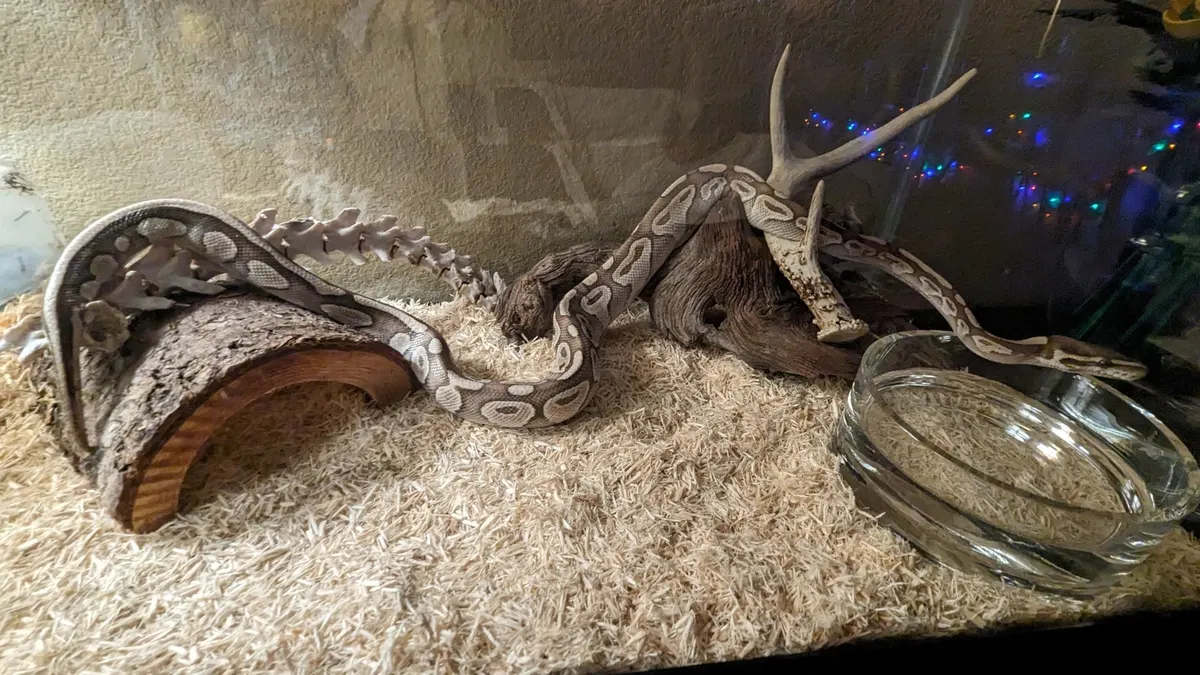
Ball Python Enclosure Setup: Size, Heat, Humidity and Hides
Length to match the snake, a 30 to 32°C warm end, 50 to 60% humidity and tight, dark hides at both ends: the ball python setup with its sources.
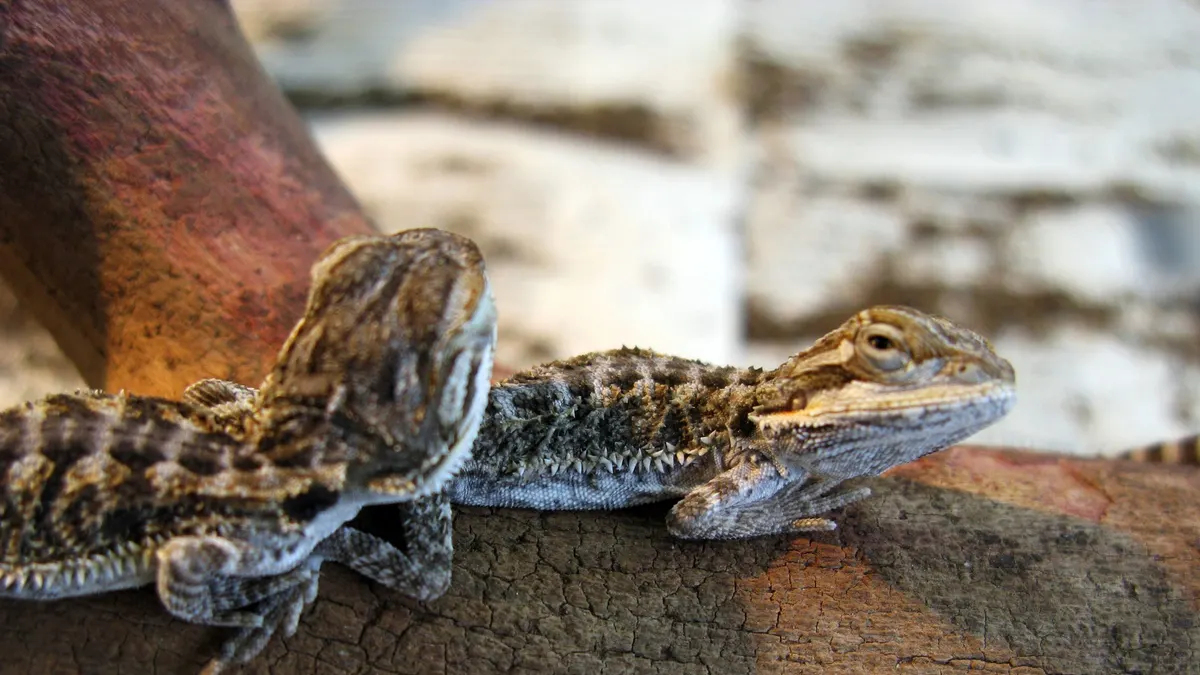
Bearded Dragon Enclosure Setup: Size, Heat, UVB and Substrate
A 4x2x2 minimum, a 100 to 108°F basking spot, a UV index of 3 to 5 under the lamp and a dry cool end: the setup, figure by figure, with sources.
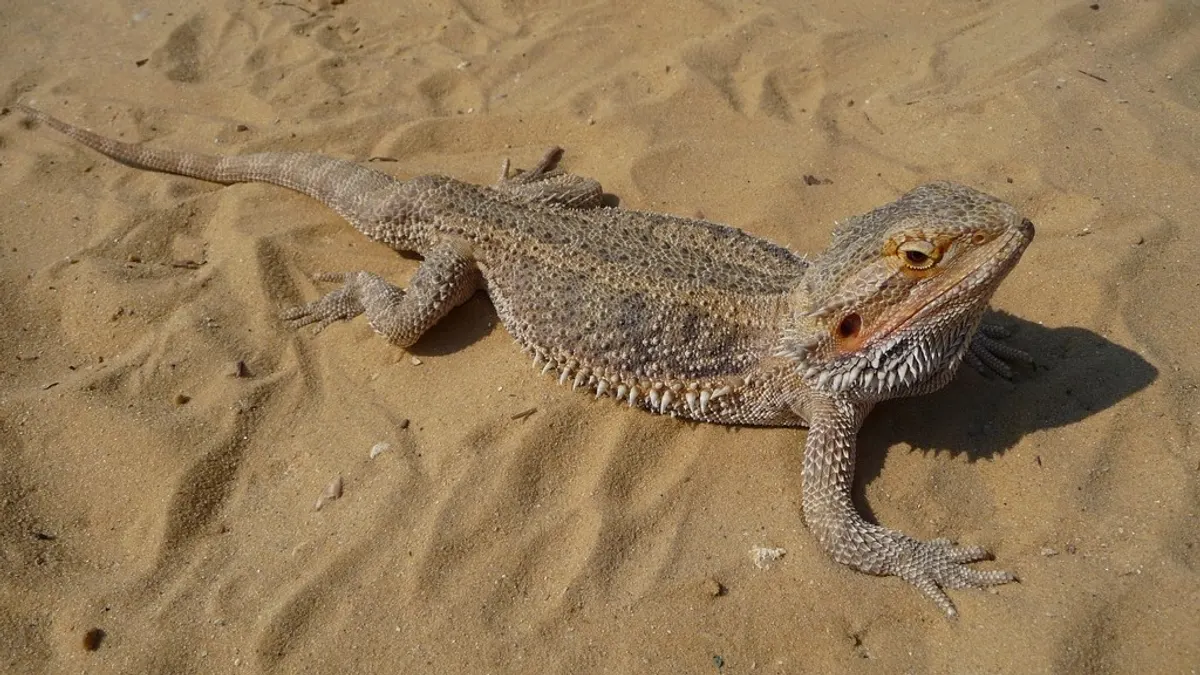
Best Bearded Dragon Enclosures of 2026: 4x2x2 and Bigger
A 4x2x2 is the floor for one adult bearded dragon. These are the enclosures that meet it, and the ones that go past it.