
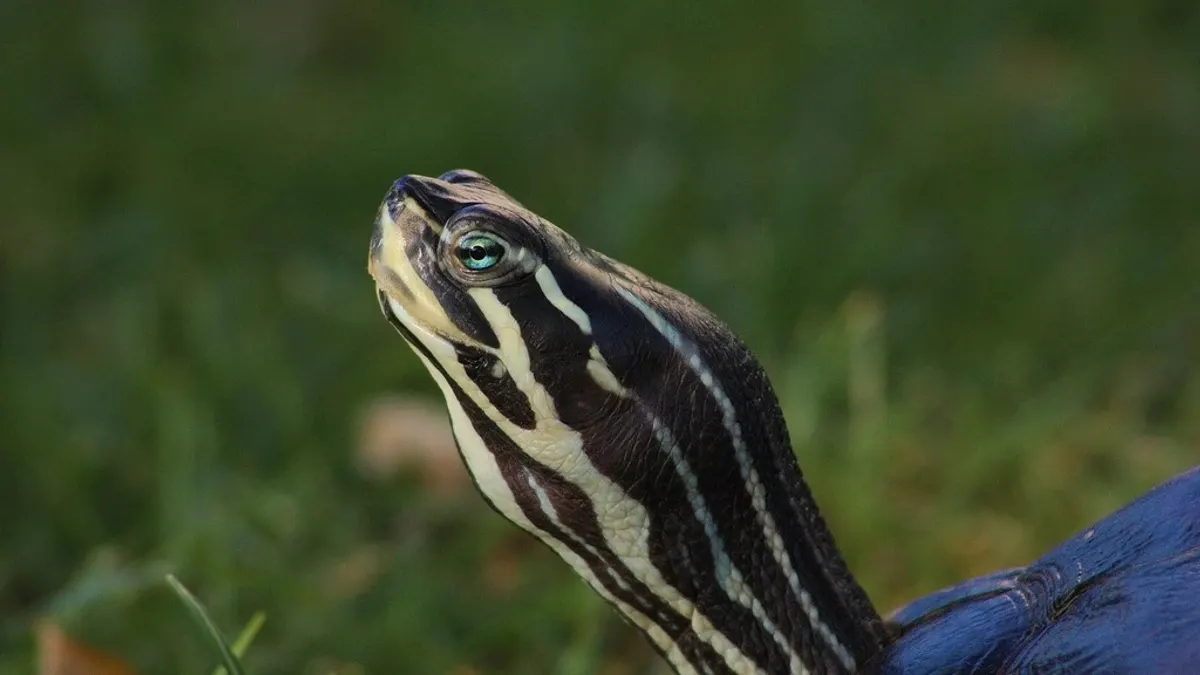
Reptile Salmonella Outbreaks: Every CDC Investigation Since 2011 (2026 Tracker)
Affiliate disclosure: product links on this page go to Amazon, or to the maker's own store for brands that sell only direct. As an Amazon Associate we earn from qualifying purchases, at no extra cost to you; a link to a maker's store earns us nothing. No retailer or brand sees our picks before they are published or has any say in them. How we choose.
Since 2011 the Centers for Disease Control and Prevention has led 15 multistate investigations of Salmonella outbreaks linked to pet reptiles. Together they count 1,224 people sick, 318 hospitalized and one death, a person in Kentucky in the 2025 bearded dragon outbreak. Turtles account for 854 of the cases, 70% of the total, and most of the turtles involved had shells under 4 inches long, the size whose sale has been banned under federal law since 1975. A new turtle outbreak was still open in September 2026, with half of the sick people under 5.
The tracker below lists every investigation with its case count, hospitalizations, the states involved, the Salmonella types and a link to CDC's page. Filter by animal or show the open investigation.
CDC Salmonella outbreaks linked to pet reptiles, 2011 to 2026
15
CDC investigations listed
1,224
People reported sick
318
Hospitalized
70%
Share linked to turtles
Showing 15 of 15 outbreak investigations
- Turtles, 2026Salmonella Paratyphi B variant L(+) tartrate+Investigation open20 sick12 states
20 people sick in 12 states, 5 hospitalized (36% of 14 with information), no deaths. Illnesses began June 6 to August 22, 2026. Children: 50% under 5.
Figures as of CDC's September 18, 2026 update. 6 of 7 people who knew the turtle's size had turtles with shells under 4 inches.
Source: CDC investigation page
- Veiled chameleons, 2026Salmonella WoodinvilleClosed5 sick4 states
5 people sick in 4 states, 2 hospitalized (40% of 5 with information), no deaths. Illnesses began February 12 to April 10, 2026. Children: All 5 were 2 or younger.
All five children lived in or visited a home with a veiled chameleon; the strain matched samples from chameleons in Iowa, Nebraska and Texas.
Source: CDC investigation page
- Bearded dragons, 2025Salmonella CothamClosed20 sick14 states1 death
20 people sick in 14 states, 9 hospitalized (53% of 17 with information), 1 death. Illnesses began May 26 to October 22, 2025. Children: 50% under 5; 40% infants.
One death, in Kentucky. The strain is closely related to the Cotham strain behind the 2012 to 2014 and 2024 bearded dragon outbreaks.
Source: CDC investigation page
- Geckos, 2024–2025Salmonella Lome, Muenchen, OranienburgClosed113 sick36 states
113 people sick in 36 states, 31 hospitalized (32% of 98 with information), no deaths. Illnesses began July 4, 2024 to November 16, 2025. Children: 25% under 5.
Of 37 patients who named the gecko, 26 had contact with crested geckos, 14 with leopard geckos and 4 with leachianus geckos; some also had bearded dragons.
Source: CDC investigation page
- Bearded dragons, 2024Salmonella CothamClosed26 sick13 states
26 people sick in 13 states, 10 hospitalized, no deaths. Illnesses began January 8 to October 31, 2024. Children: 67% under 5.
Of 25 people interviewed, 17 had contact with a bearded dragon. Median age 1 year.
Source: CDC investigation page
- Turtles, 2023–2024Salmonella Stanley, PoonaClosed63 sick22 states
63 people sick in 22 states, 28 hospitalized (45% of 62 with information), no deaths. Illnesses began August 20, 2023 to August 12, 2024. Children: 35% under 5.
Of 29 people who reported the turtle's size, 27 had turtles with shells under 4 inches.
Source: CDC investigation page
- Turtles, 2021–2022Salmonella Stanley, PomonaClosed28 sick16 states
28 people sick in 16 states, 10 hospitalized (43% of 23 with information), no deaths. Illnesses began September 17, 2021 to September 12, 2022. Children: 21% under 5.
All 14 people who reported the turtle's size had turtles with shells under 4 inches.
Source: CDC investigation page
- Bearded dragons, 2020Salmonella MuensterClosed18 sick11 states
18 people sick in 11 states, 11 hospitalized (65% of 17 with information), no deaths. Illnesses began January 29 to October 17, 2020. Children: 6 children under 5.
Source: CDC investigation page
- Turtles, 2019Salmonella TyphimuriumClosed35 sick9 states
35 people sick in 9 states, 11 hospitalized, no deaths. Illnesses began July 29 to December 24, 2019. Children: 69% under 12.
People reported contact with turtles with shells under 4 inches.
Source: CDC investigation page
- Turtles, 2019Salmonella OranienburgClosed26 sick14 states
26 people sick in 14 states, 8 hospitalized (33% of 24 with information), no deaths. Illnesses began May 29 to October 31, 2019.
Source: CDC investigation page
- Turtles, 2017Salmonella AgbeniClosed76 sick19 states
76 people sick in 19 states, 30 hospitalized (48% of 63 with information), no deaths. Illnesses began March 1 to December 1, 2017. Children: 32% under 5.
Source: CDC investigation page
- Turtles, 2015–2016Salmonella Four outbreak strainsClosed133 sick26 states
133 people sick in 26 states, 38 hospitalized, no deaths. Illnesses began January 16, 2015 to April 8, 2016. Children: 41% aged 5 or younger.
Four separate multistate outbreaks linked to small turtles; most people who had contact bought the turtle from a street vendor.
Source: CDC investigation page
- Geckos, 2014–2015Salmonella MuenchenClosed22 sick17 states
22 people sick in 17 states, 3 hospitalized (14% of 22 with information), no deaths. Illnesses began January 1, 2014 to June 16, 2015. Children: Median age 14.
Linked to crested geckos bought from multiple pet stores in different states.
Source: CDC investigation page
- Bearded dragons, 2012–2014Salmonella Cotham, KisaraweClosed166 sick36 states
166 people sick in 36 states, 44 hospitalized (37% of 118 with information), no deaths. Illnesses began From February 21, 2012. Children: 59% aged 5 or younger.
Median age 3 years. Linked to bearded dragons bought from multiple stores in different states.
Source: CDC investigation page
- Turtles, 2011–2013Salmonella Eight outbreak strainsClosed473 sick43 states
473 people sick in 43 states, 78 hospitalized (29% of 272 with information), no deaths. Illnesses began May 23, 2011 to September 9, 2013. Children: 70% aged 10 or younger; 31% aged 1 or younger.
Eight multistate outbreaks across 41 states, the District of Columbia and Puerto Rico (counted here as 43). 44% of sick people were Hispanic.
Source: CDC investigation page
People reported sick, by animal
- Turtles854
- Bearded dragons230
- Geckos135
- Veiled chameleons5
Laboratory-confirmed cases in the CDC investigations above, 2011 to 2026.
Who gets sick
Young children carry the heaviest load. In the 2026 veiled chameleon outbreak all five patients were 2 or younger; in the 2024 bearded dragon outbreak 67% were under 5 and the median age was 1; in the 2011 to 2013 turtle outbreaks 31% were 1 or younger. Some children never touched the animal: CDC notes cases where a child was exposed through a reptile that roamed the home or through surfaces it had touched. That is why CDC says reptiles are not recommended for households with children under 5, adults 65 and older, or people with weakened immune systems.
| Animal | CDC investigations | People sick |
|---|---|---|
| Turtles | 8 | 854 |
| Bearded dragons | 4 | 230 |
| Geckos (crested, leopard and others) | 2 | 135 |
| Veiled chameleons | 1 | 5 |
The 4-inch turtle rule
Federal regulations (21 CFR 1240.62) ban selling or distributing turtles with shells under 4 inches long as pets, because small turtles were a major cause of Salmonella in children. CDC's investigations keep finding them anyway: in the 2023 to 2024 outbreaks, 27 of 29 people who knew the turtle's size had one under 4 inches, and in 2021 to 2022 all 14 did. CDC says these turtles are still sold at flea markets, roadside stands, online and at reptile expos. A small turtle offered for sale is a red flag, not a bargain.
The same strains keep coming back
The Salmonella Cotham strain behind the 2025 bearded dragon outbreak is closely related to the strains in the 2024 outbreak and in the 2012 to 2014 outbreak of 166 cases, which CDC traced to bearded dragons sold by stores in many states. Breeding and supply chains can keep one strain circulating for years, which is one reason CDC asks pet stores to keep species separate and to give buyers a safety handout.
How to keep a reptile household safe
- Wash hands with soap and water right after touching the animal, its food or anything in its enclosure.
- Keep reptiles out of the kitchen and off surfaces where food is prepared, and do not let them roam where babies crawl.
- Clean enclosures and water bowls outside or in a laundry sink or bathtub that is disinfected afterwards, never the kitchen sink; see our cleaning and disinfecting guide.
- Do not kiss or snuggle reptiles, and change your shirt before holding an infant.
For species care, see our reptile temperature and UVB chart and the setup guides for bearded dragons and leopard geckos.
Data and updates
Figures come from each investigation's final CDC update, current or archived, read on October 12, 2026; the open 2026 turtle outbreak uses CDC's September 18, 2026 update. Counts are laboratory-confirmed cases, which CDC says understate the true number. The tracker covers investigations CDC led from 2011 onward; a 2016 CDC study counted 15 multistate turtle outbreaks between 2006 and 2014 alone. We add new investigations as CDC posts them.
Frequently asked questions
How many people get Salmonella from pet reptiles?
CDC's 15 multistate investigations linked to pet reptiles from 2011 to 2026 counted 1,224 laboratory-confirmed cases, 318 hospitalizations and one death. CDC says the true number is much higher, because most people recover without being tested, and most reptile-linked infections never become part of a multistate investigation.
Is there a Salmonella outbreak linked to turtles right now?
Yes. As of CDC's September 18, 2026 update, an outbreak of Salmonella Paratyphi B variant L(+) tartrate+ linked to pet turtles had sickened 20 people in 12 states, with 5 hospitalized. Half of the sick people were children under 5, and most who knew the turtle's size had one with a shell under 4 inches.
Why are small turtles illegal to sell?
Federal regulations (21 CFR 1240.62) have banned the sale and distribution of turtles with shells under 4 inches long as pets since 1975, because they caused many Salmonella infections in young children. CDC investigations still find them being sold at flea markets, roadside stands, online and at expos.
Can bearded dragons and geckos give you Salmonella?
Yes. CDC has linked four multistate outbreaks to bearded dragons (230 people sick, including one death in 2025) and two to geckos (135 people), mostly crested and leopard geckos. Any reptile can carry Salmonella in its droppings while looking healthy.
Should children have pet reptiles?
CDC does not recommend reptiles for households with children under 5, adults 65 and older, or people with weakened immune systems. In the 2026 veiled chameleon outbreak every patient was 2 or younger, and in the 2024 bearded dragon outbreak two thirds were under 5.
Sources
- Salmonella Outbreak Linked to Turtles (August 2026), Centers for Disease Control and Prevention
- Salmonella Outbreak Linked to Bearded Dragons (November 2025), Centers for Disease Control and Prevention
- Salmonella Outbreaks Linked to Geckos (March 2025), Centers for Disease Control and Prevention
- Eight Multistate Outbreaks of Human Salmonella Infections Linked to Small Turtles (2011 to 2013), Centers for Disease Control and Prevention (archive)
- Turtle-Associated Salmonellosis, United States, 2006-2014, Emerging Infectious Diseases (CDC)
- 21 CFR 1240.62: Turtles intrastate and interstate requirements, Electronic Code of Federal Regulations
Cover photo: Peninsula cooter turtle close up by rawpixel.com, CC0 1.0, via rawpixel. Cropped.
Related guides
How to Clean and Disinfect a Reptile Enclosure (Safely)
Spot clean waste as it appears, deep clean monthly, and use a disinfectant at the label's dilution and contact time. Here is the routine with every figure sourced.
Reptile Temperature and UVB Chart: Basking, Day and Night Temps for 59 Species
A searchable chart of 59 lizards, snakes, tortoises and turtles: basking surface, daytime and night temperatures, UVB zone and, where Merck covers them, humidity and diet.
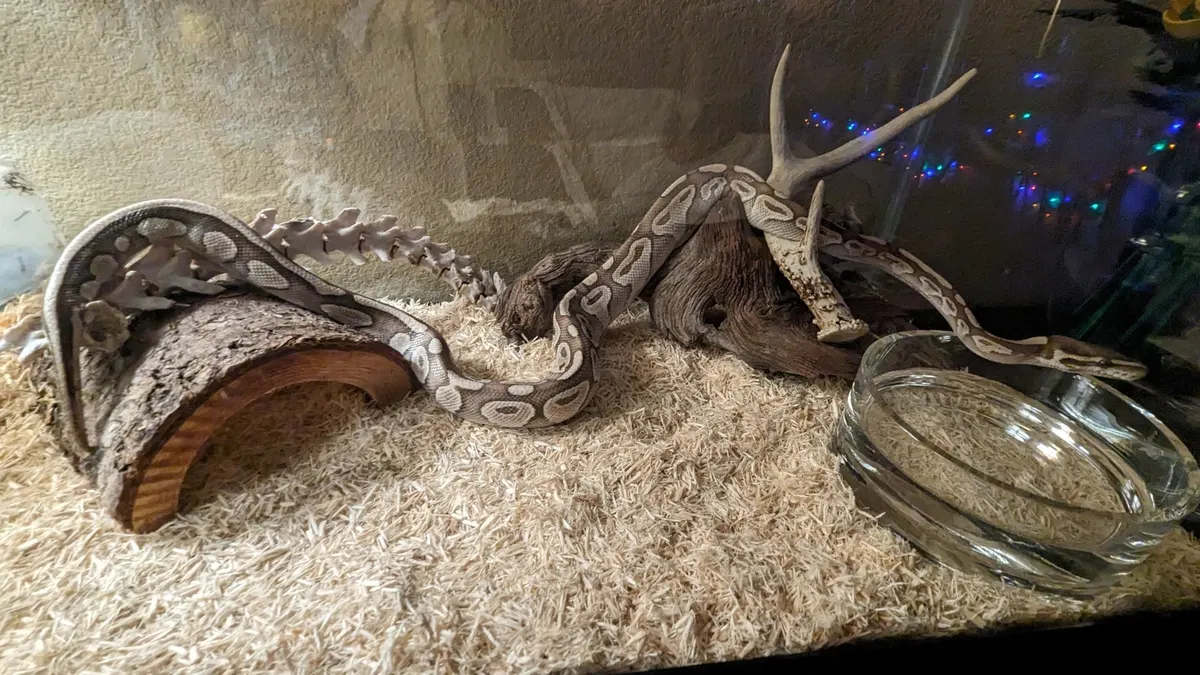
Ball Python Enclosure Setup: Size, Heat, Humidity and Hides
Length to match the snake, a 30 to 32°C warm end, 50 to 60% humidity and tight, dark hides at both ends: the ball python setup with its sources.