
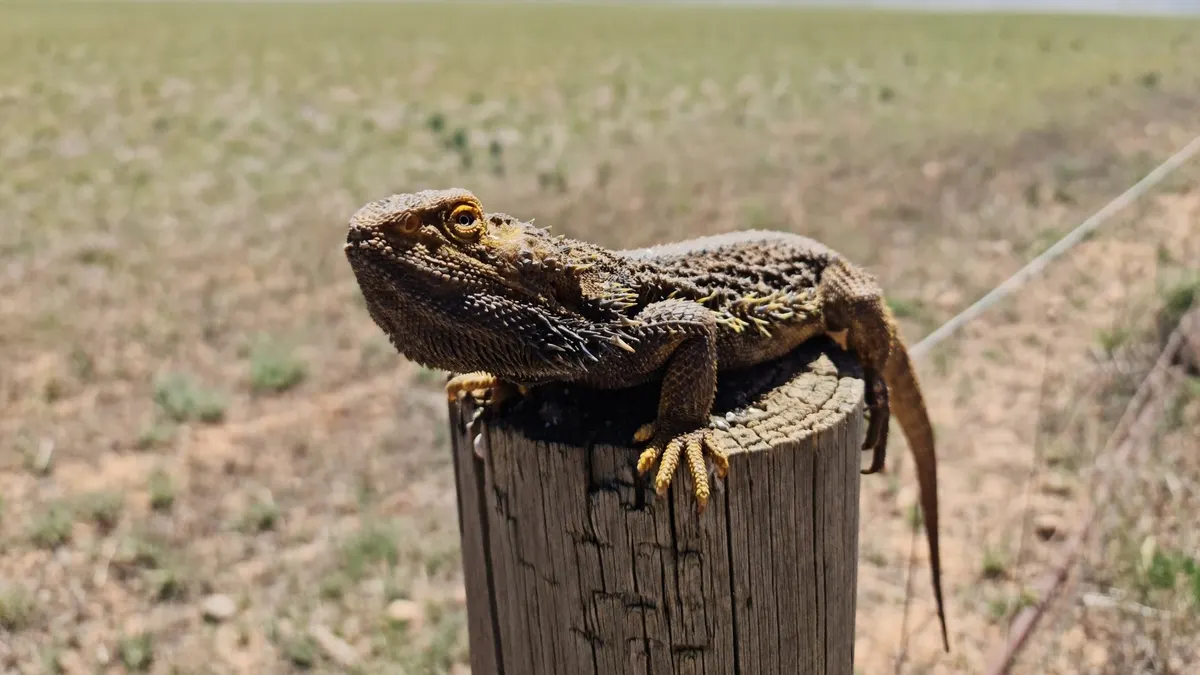
Reptile Temperature and UVB Chart: Basking, Day and Night Temps for 59 Species
Affiliate disclosure: product links on this page go to Amazon, or to the maker's own store for brands that sell only direct. As an Amazon Associate we earn from qualifying purchases, at no extra cost to you; a link to a maker's store earns us nothing. No retailer or brand sees our picks before they are published or has any say in them. How we choose.
A bearded dragon wants a basking surface of 40 to 45°C (104 to 113°F) and sits in UVB Ferguson zone 3 to 4; a leopard gecko needs a 32°C (90°F) basking spot and only zone 1 levels of UVB; a ball python wants 35 to 40°C at the basking spot, 28 to 30°C by day and 24 to 26°C at night. Those figures come from the UV-Tool, a database of 254 species published in the Journal of Zoo and Aquarium Research in 2016 by Frances Baines and colleagues for the British and Irish zoo association's reptile working group.
The chart below gives those figures for 59 common pet reptiles, with the Merck Veterinary Manual's temperature range, humidity, lighting and diet beside them where Merck covers the species. Search for your animal, or filter by group or UVB zone.
Reptile temperatures, UVB zones and humidity by species
59
Species listed
12
Shade dwellers (zone 1)
13
Mid-day baskers (zone 4)
13
With Merck humidity figures
Showing 59 of 59 species
- Bearded dragonPogona vitticepsFerguson zone 3–4Lizard
UV-Tool: basking surface 40–45°C (104–113°F), daytime air 25–30°C (77–86°F), night air 20–25°C (68–77°F). Zone 3–4 (open or partial sun basker to mid-day sun basker) means a UV index gradient of about 1 to 3.5, peaking at 2.9 to 9.5 at the basking spot.
- Day length (light:dark hours)
- 13:11 to 14:10
- Winter treatment
- Cooling or Brumation
- Merck: preferred air temperature range
- 25–32°C (77–90°F); basking about 5°C warmer, nights about 5°C cooler
- Merck: humidity
- 20–30%
- Merck: lighting
- UVB essential
- Merck: diet
- Mainly insectivorous; partly carnivorous and herbivorous
Source: Baines et al. 2016, UV-Tool appendix; Merck Veterinary Manual table; Our setup guide
- Leopard geckoEublepharis maculariusFerguson zone 1LizardSources differ on UVB
UV-Tool: basking surface 32°C (90°F), daytime air 25–29°C (77–84°F), night air 20–24°C (68–75°F). Zone 1 (crepuscular or shade dweller) means a UV index gradient of about 0 to 0.7, peaking at 0.6 to 1.4 at the basking spot.
- Day length (light:dark hours)
- 14:10
- Winter treatment
- Cooling
- Merck: preferred air temperature range
- 25–30°C (77–86°F); basking about 5°C warmer, nights about 5°C cooler
- Merck: humidity
- 20–30%
- Merck: lighting
- No special lighting required (UVB still recommended)
- Merck: diet
- Mainly insectivorous; partly carnivorous
The UV-Tool puts this species in zone 1, so it suggests low-level UVB. Merck lists no special lighting requirement but adds that UVB is still recommended for its likely health benefits.
Source: Baines et al. 2016, UV-Tool appendix; Merck Veterinary Manual table; Our setup guide
- Crested geckoCorrelophus (Rhacodactylus) ciliatusFerguson zone 1Lizard
UV-Tool: basking surface 28°C (82°F), daytime air 25–28°C (77–82°F), night air 23–25°C (73–77°F). Zone 1 (crepuscular or shade dweller) means a UV index gradient of about 0 to 0.7, peaking at 0.6 to 1.4 at the basking spot.
- Day length (light:dark hours)
- 14:10
- Winter treatment
- Cooling
Source: Baines et al. 2016, UV-Tool appendix; Our setup guide
- Gargoyle geckoRhacodactylus auriculatusFerguson zone 2Lizard
UV-Tool: basking surface 29°C (84°F), daytime air 25–29°C (77–84°F), night air 20–25°C (68–77°F). Zone 2 (partial sun or occasional basker) means a UV index gradient of about 0.7 to 1, peaking at 1.1 to 3 at the basking spot.
- Day length (light:dark hours)
- 12:12
- Giant day geckoPhelsuma grandisFerguson zone 3Lizard
UV-Tool: basking surface 30–35°C (86–95°F), daytime air 25–30°C (77–86°F), night air 23–25°C (73–77°F). Zone 3 (open or partial sun basker) means a UV index gradient of about 1 to 2.6, peaking at 2.9 to 7.4 at the basking spot.
- Day length (light:dark hours)
- 13:11
- Electric blue day geckoLygodactylus williamsiFerguson zone 2–3Lizard
UV-Tool: basking surface 30–32°C (86–90°F), daytime air 26–28°C (79–82°F), night air 20–22°C (68–72°F). Zone 2–3 (partial sun or occasional basker to open or partial sun basker) means a UV index gradient of about 0.7 to 2.6, peaking at 1.1 to 7.4 at the basking spot.
- Day length (light:dark hours)
- 12:12
- Henkel's leaf-tailed geckoUroplatus henkeliFerguson zone 1–2Lizard
UV-Tool: basking surface 25–28°C (77–82°F), daytime air 23–25°C (73–77°F), night air 18–20°C (64–68°F). Zone 1–2 (crepuscular or shade dweller to partial sun or occasional basker) means a UV index gradient of about 0 to 1, peaking at 0.6 to 3 at the basking spot.
- Day length (light:dark hours)
- 12:12
- Winter treatment
- Cooling
- Eastern blue-tongued skinkTiliqua scincoidesFerguson zone 2–3Lizard
UV-Tool: basking surface 35–45°C (95–113°F), daytime air 28–32°C (82–90°F), night air 20–24°C (68–75°F). Zone 2–3 (partial sun or occasional basker to open or partial sun basker) means a UV index gradient of about 0.7 to 2.6, peaking at 1.1 to 7.4 at the basking spot.
- Day length (light:dark hours)
- 13:11 to 14:10
- Winter treatment
- Cooling
Source: Baines et al. 2016, UV-Tool appendix; Our setup guide
- Blotched blue-tongued skinkTiliqua nigroluteaFerguson zone 2–3Lizard
UV-Tool: basking surface 35–40°C (95–104°F), daytime air 26–30°C (79–86°F), night air 18–22°C (64–72°F). Zone 2–3 (partial sun or occasional basker to open or partial sun basker) means a UV index gradient of about 0.7 to 2.6, peaking at 1.1 to 7.4 at the basking spot.
- Day length (light:dark hours)
- 14:10
- Winter treatment
- Cooling or Brumation
Source: Baines et al. 2016, UV-Tool appendix; Our setup guide
- Solomon Islands skink (monkey-tailed skink)Corucia zebrataFerguson zone 2Lizard
UV-Tool: basking surface 30–35°C (86–95°F), daytime air 27–29°C (81–84°F), night air 23–25°C (73–77°F). Zone 2 (partial sun or occasional basker) means a UV index gradient of about 0.7 to 1, peaking at 1.1 to 3 at the basking spot.
- Day length (light:dark hours)
- 12:12
- Red-eyed crocodile skinkTribolonotus gracilisFerguson zone 1Lizard
UV-Tool: basking surface 28–32°C (82–90°F), daytime air 23–28°C (73–82°F), night air 23–25°C (73–77°F). Zone 1 (crepuscular or shade dweller) means a UV index gradient of about 0 to 0.7, peaking at 0.6 to 1.4 at the basking spot.
- Day length (light:dark hours)
- 12:12
- Fire skinkLepidothyris (Riopa) fernandiFerguson zone 2Lizard
UV-Tool: basking surface 35°C (95°F), daytime air 25–30°C (77–86°F), night air 20–25°C (68–77°F). Zone 2 (partial sun or occasional basker) means a UV index gradient of about 0.7 to 1, peaking at 1.1 to 3 at the basking spot.
- Day length (light:dark hours)
- 12:12
- Cunningham's skinkEgernia cunninghamiFerguson zone 3–4Lizard
UV-Tool: basking surface 35–40°C (95–104°F), daytime air 28–32°C (82–90°F), night air 20–24°C (68–75°F). Zone 3–4 (open or partial sun basker to mid-day sun basker) means a UV index gradient of about 1 to 3.5, peaking at 2.9 to 9.5 at the basking spot.
- Day length (light:dark hours)
- 14:10
- Winter treatment
- Cooling or Brumation
- Veiled chameleonChamaeleo calyptratusFerguson zone 3Lizard
UV-Tool: basking surface 35–40°C (95–104°F), daytime air 25–35°C (77–95°F), night air 23–25°C (73–77°F). Zone 3 (open or partial sun basker) means a UV index gradient of about 1 to 2.6, peaking at 2.9 to 7.4 at the basking spot.
- Day length (light:dark hours)
- 13:11
- Panther chameleonFurcifer pardalisFerguson zone 3Lizard
UV-Tool: basking surface 35–40°C (95–104°F), daytime air 25–30°C (77–86°F), night air 18–24°C (64–75°F). Zone 3 (open or partial sun basker) means a UV index gradient of about 1 to 2.6, peaking at 2.9 to 7.4 at the basking spot.
- Day length (light:dark hours)
- 12:12 to 13:11
- Jackson's chameleonTrioceros jacksoniiFerguson zone 2–3Lizard
UV-Tool: basking surface 36°C (97°F), daytime air 24–25°C (75–77°F), night air 16–17°C (61–63°F). Zone 2–3 (partial sun or occasional basker to open or partial sun basker) means a UV index gradient of about 0.7 to 2.6, peaking at 1.1 to 7.4 at the basking spot.
- Day length (light:dark hours)
- 12:12
- Green anoleAnolis carolinensisFerguson zone 2Lizard
UV-Tool: basking surface 30–35°C (86–95°F), daytime air 25–30°C (77–86°F), night air 20–25°C (68–77°F). Zone 2 (partial sun or occasional basker) means a UV index gradient of about 0.7 to 1, peaking at 1.1 to 3 at the basking spot.
- Day length (light:dark hours)
- 14:10
- Winter treatment
- Cooling
- Chinese water dragonPhysignathus cocincinusFerguson zone 2–3Lizard
UV-Tool: basking surface 30–40°C (86–104°F), daytime air 26–28°C (79–82°F), night air 20–22°C (68–72°F). Zone 2–3 (partial sun or occasional basker to open or partial sun basker) means a UV index gradient of about 0.7 to 2.6, peaking at 1.1 to 7.4 at the basking spot.
- Day length (light:dark hours)
- 13:11
- Winter treatment
- Cooling
- Merck: preferred air temperature range
- 24–30°C (75–86°F); basking about 5°C warmer, nights about 5°C cooler
- Merck: humidity
- 80–90%
- Merck: lighting
- UVB essential
- Merck: diet
- Mainly insectivorous; partly carnivorous and herbivorous
Source: Baines et al. 2016, UV-Tool appendix; Merck Veterinary Manual table
- Australian water dragonIntellagama lesueuriiFerguson zone 2Lizard
UV-Tool: basking surface 35°C (95°F), daytime air 25–30°C (77–86°F), night air 20–25°C (68–77°F). Zone 2 (partial sun or occasional basker) means a UV index gradient of about 0.7 to 1, peaking at 1.1 to 3 at the basking spot.
- Day length (light:dark hours)
- 14:10
- Winter treatment
- Brumation
- Green basiliskBasiliscus plumifronsFerguson zone 2Lizard
UV-Tool: basking surface 30–35°C (86–95°F), daytime air 25–30°C (77–86°F), night air 24–26°C (75–79°F). Zone 2 (partial sun or occasional basker) means a UV index gradient of about 0.7 to 1, peaking at 1.1 to 3 at the basking spot.
- Day length (light:dark hours)
- 12:12
- Savannah monitorVaranus exanthematicusFerguson zone 3–4Lizard
UV-Tool: basking surface 55–65°C (131–149°F), daytime air 30–40°C (86–104°F), night air 23°C (73°F). Zone 3–4 (open or partial sun basker to mid-day sun basker) means a UV index gradient of about 1 to 3.5, peaking at 2.9 to 9.5 at the basking spot.
- Day length (light:dark hours)
- 13:11
- Winter treatment
- Cooling
- Merck: preferred air temperature range
- 25–32°C (77–90°F); basking about 5°C warmer, nights about 5°C cooler
- Merck: humidity
- 20–40%
- Merck: lighting
- UVB essential
- Merck: diet
- Mainly carnivorous; partly insectivorous
Source: Baines et al. 2016, UV-Tool appendix; Merck Veterinary Manual table
- Emerald tree monitorVaranus prasinusFerguson zone 2Lizard
UV-Tool: basking surface 35–40°C (95–104°F), daytime air 28–32°C (82–90°F), night air 24–26°C (75–79°F). Zone 2 (partial sun or occasional basker) means a UV index gradient of about 0.7 to 1, peaking at 1.1 to 3 at the basking spot.
- Day length (light:dark hours)
- 12:12
- Black tree monitorVaranus beccariiFerguson zone 3Lizard
UV-Tool: basking surface 40–50°C (104–122°F), daytime air 28–35°C (82–95°F), night air 23–26°C (73–79°F). Zone 3 (open or partial sun basker) means a UV index gradient of about 1 to 2.6, peaking at 2.9 to 7.4 at the basking spot.
- Day length (light:dark hours)
- 12:12
- Argentine black and white teguSalvator (Tupinambis) merianaeFerguson zone 3Lizard
UV-Tool: basking surface 35–40°C (95–104°F), daytime air 25–30°C (77–86°F), night air 20°C (68°F). Zone 3 (open or partial sun basker) means a UV index gradient of about 1 to 2.6, peaking at 2.9 to 7.4 at the basking spot.
- Day length (light:dark hours)
- 13:11
- Winter treatment
- Brumation
- Egyptian uromastyxUromastyx aegyptiaFerguson zone 4Lizard
UV-Tool: basking surface 45–50°C (113–122°F), daytime air 30–38°C (86–100°F), night air 20–25°C (68–77°F). Zone 4 (mid-day sun basker) means a UV index gradient of about 2.6 to 3.5, peaking at 4.5 to 9.5 at the basking spot.
- Day length (light:dark hours)
- 14:10
- Winter treatment
- Cooling
- Ornate uromastyxUromastyx ornataFerguson zone 4Lizard
UV-Tool: basking surface 40–50°C (104–122°F), daytime air 30°C (86°F), night air 20°C (68°F). Zone 4 (mid-day sun basker) means a UV index gradient of about 2.6 to 3.5, peaking at 4.5 to 9.5 at the basking spot.
- Day length (light:dark hours)
- 14:10
- Winter treatment
- Cooling
- Saharan uromastyxUromastyx geyriFerguson zone 4Lizard
UV-Tool: basking surface 45–50°C (113–122°F), daytime air 28–35°C (82–95°F), night air 16–18°C (61–64°F). Zone 4 (mid-day sun basker) means a UV index gradient of about 2.6 to 3.5, peaking at 4.5 to 9.5 at the basking spot.
- Day length (light:dark hours)
- 12:12
- Winter treatment
- Cooling
- Collared lizardCrotaphytus collarisFerguson zone 3–4Lizard
UV-Tool: basking surface 40–48°C (104–118°F), daytime air 25–32°C (77–90°F), night air 20–26°C (68–79°F). Zone 3–4 (open or partial sun basker to mid-day sun basker) means a UV index gradient of about 1 to 3.5, peaking at 2.9 to 9.5 at the basking spot.
- Day length (light:dark hours)
- 14:10
- Winter treatment
- Brumation or Hibernation
- Blue spiny lizardSceloporus serrifer cyanogenysFerguson zone 4Lizard
UV-Tool: basking surface 35–40°C (95–104°F), daytime air 28–35°C (82–95°F), night air 24–26°C (75–79°F). Zone 4 (mid-day sun basker) means a UV index gradient of about 2.6 to 3.5, peaking at 4.5 to 9.5 at the basking spot.
- Day length (light:dark hours)
- 14:10
- Sudan plated lizardGerrhosaurus majorFerguson zone 3Lizard
UV-Tool: basking surface 35–40°C (95–104°F), daytime air 25–30°C (77–86°F), night air 20°C (68°F). Zone 3 (open or partial sun basker) means a UV index gradient of about 1 to 2.6, peaking at 2.9 to 7.4 at the basking spot.
- Day length (light:dark hours)
- 12:12 to 13:11
- Winter treatment
- None or Cooling
- Rhinoceros iguanaCyclura cornutaFerguson zone 4Lizard
UV-Tool: basking surface 40–50°C (104–122°F), daytime air 30–35°C (86–95°F), night air 25–28°C (77–82°F). Zone 4 (mid-day sun basker) means a UV index gradient of about 2.6 to 3.5, peaking at 4.5 to 9.5 at the basking spot.
- Day length (light:dark hours)
- 13:11
- Corn snakePantherophis guttatusFerguson zone 1–2SnakeSources differ on UVB
UV-Tool: basking surface 31°C (88°F), daytime air 24–26°C (75–79°F), night air 20°C (68°F). Zone 1–2 (crepuscular or shade dweller to partial sun or occasional basker) means a UV index gradient of about 0 to 1, peaking at 0.6 to 3 at the basking spot.
- Day length (light:dark hours)
- 13:11
- Merck: preferred air temperature range
- 25–30°C (77–86°F); basking about 5°C warmer, nights about 5°C cooler
- Merck: humidity
- 30–70%
- Merck: lighting
- No special lighting required (UVB still recommended)
- Merck: diet
- Mainly carnivorous
The UV-Tool puts this species in zone 1–2, so it suggests low-level UVB. Merck lists no special lighting requirement but adds that UVB is still recommended for its likely health benefits.
Source: Baines et al. 2016, UV-Tool appendix; Merck Veterinary Manual table; Our setup guide
- Ball pythonPython regiusFerguson zone 2SnakeSources differ on UVB
UV-Tool: basking surface 35–40°C (95–104°F), daytime air 28–30°C (82–86°F), night air 24–26°C (75–79°F). Zone 2 (partial sun or occasional basker) means a UV index gradient of about 0.7 to 1, peaking at 1.1 to 3 at the basking spot.
- Day length (light:dark hours)
- 12:12
- Winter treatment
- Cooling
- Merck: preferred air temperature range
- 25–30°C (77–86°F); basking about 5°C warmer, nights about 5°C cooler
- Merck: humidity
- 50–80%
- Merck: lighting
- No special lighting required (UVB still recommended)
- Merck: diet
- Mainly carnivorous
The UV-Tool puts this species in zone 2, so it suggests low-level UVB. Merck lists no special lighting requirement but adds that UVB is still recommended for its likely health benefits.
Source: Baines et al. 2016, UV-Tool appendix; Merck Veterinary Manual table; Our setup guide
- Boa constrictorBoa constrictorFerguson zone 2SnakeSources differ on UVB
UV-Tool: basking surface 28–30°C (82–86°F), daytime air 24–30°C (75–86°F), night air 18–24°C (64–75°F). Zone 2 (partial sun or occasional basker) means a UV index gradient of about 0.7 to 1, peaking at 1.1 to 3 at the basking spot.
- Day length (light:dark hours)
- 13:11
- Winter treatment
- Cooling
- Merck: preferred air temperature range
- 28–31°C (82–88°F); basking about 5°C warmer, nights about 5°C cooler
- Merck: humidity
- 70–95%
- Merck: lighting
- No special lighting required (UVB still recommended)
- Merck: diet
- Mainly carnivorous
The UV-Tool puts this species in zone 2, so it suggests low-level UVB. Merck lists no special lighting requirement but adds that UVB is still recommended for its likely health benefits.
Source: Baines et al. 2016, UV-Tool appendix; Merck Veterinary Manual table
- Western hognose snakeHeterodon nasicusFerguson zone 2Snake
UV-Tool: basking surface 28–30°C (82–86°F), daytime air 24–30°C (75–86°F), night air 20–24°C (68–75°F). Zone 2 (partial sun or occasional basker) means a UV index gradient of about 0.7 to 1, peaking at 1.1 to 3 at the basking spot.
- Day length (light:dark hours)
- 14:10
- Winter treatment
- Cooling or Brumation
- Pueblan milk snakeLampropeltis triangulum campbelliFerguson zone 1Snake
UV-Tool: basking surface 28–32°C (82–90°F), daytime air 24–28°C (75–82°F), night air 24–26°C (75–79°F). Zone 1 (crepuscular or shade dweller) means a UV index gradient of about 0 to 0.7, peaking at 0.6 to 1.4 at the basking spot.
- Day length (light:dark hours)
- 13:11
- Winter treatment
- Brumation
- Sinaloan milk snakeLampropeltis triangulum sinaloaeFerguson zone 1Snake
UV-Tool: basking surface 28–32°C (82–90°F), daytime air 24–28°C (75–82°F), night air 24–26°C (75–79°F). Zone 1 (crepuscular or shade dweller) means a UV index gradient of about 0 to 0.7, peaking at 0.6 to 1.4 at the basking spot.
- Day length (light:dark hours)
- 13:11
- Winter treatment
- Brumation
- Bredl's carpet pythonMorelia bredliFerguson zone 2Snake
UV-Tool: basking surface 30–32°C (86–90°F), daytime air 28–30°C (82–86°F), night air 26–28°C (79–82°F). Zone 2 (partial sun or occasional basker) means a UV index gradient of about 0.7 to 1, peaking at 1.1 to 3 at the basking spot.
- Day length (light:dark hours)
- 13:11 to 14:10
- Winter treatment
- Cooling
- Diamond pythonMorelia spilota spilotaFerguson zone 3Snake
UV-Tool: basking surface 32°C (90°F), daytime air 25–28°C (77–82°F), night air 20–26°C (68–79°F). Zone 3 (open or partial sun basker) means a UV index gradient of about 1 to 2.6, peaking at 2.9 to 7.4 at the basking spot.
- Day length (light:dark hours)
- 14:10
- Winter treatment
- Cooling
- Green tree pythonMorelia viridisFerguson zone 1Snake
UV-Tool: daytime air 26–30°C (79–86°F), night air 24–26°C (75–79°F). Zone 1 (crepuscular or shade dweller) means a UV index gradient of about 0 to 0.7, peaking at 0.6 to 1.4 at the basking spot.
- Day length (light:dark hours)
- 12:12
- Emerald tree boaCorallus caninusFerguson zone 1Snake
UV-Tool: daytime air 26–30°C (79–86°F), night air 24–26°C (75–79°F). Zone 1 (crepuscular or shade dweller) means a UV index gradient of about 0 to 0.7, peaking at 0.6 to 1.4 at the basking spot.
- Day length (light:dark hours)
- 12:12
- Dumeril's boaAcrantophis dumeriliFerguson zone 2Snake
UV-Tool: basking surface 40–45°C (104–113°F), daytime air 30–35°C (86–95°F), night air 24–28°C (75–82°F). Zone 2 (partial sun or occasional basker) means a UV index gradient of about 0.7 to 1, peaking at 1.1 to 3 at the basking spot.
- Day length (light:dark hours)
- 13:11
- Winter treatment
- Cooling
- Children's pythonAntaresia childreniFerguson zone 1–2Snake
UV-Tool: basking surface 40–45°C (104–113°F), daytime air 28–35°C (82–95°F), night air 25–28°C (77–82°F). Zone 1–2 (crepuscular or shade dweller to partial sun or occasional basker) means a UV index gradient of about 0 to 1, peaking at 0.6 to 3 at the basking spot.
- Day length (light:dark hours)
- 12:12 to 13:11
- Winter treatment
- Cooling
- Woma pythonAspidites ramsayiFerguson zone 1–2Snake
UV-Tool: basking surface 32°C (90°F), daytime air 28–30°C (82–86°F), night air 25–28°C (77–82°F). Zone 1–2 (crepuscular or shade dweller to partial sun or occasional basker) means a UV index gradient of about 0 to 1, peaking at 0.6 to 3 at the basking spot.
- Day length (light:dark hours)
- 13:11 to 14:10
- Winter treatment
- Cooling
- Sulcata tortoiseCentrochelys sulcataFerguson zone 3–4Tortoise
UV-Tool: basking surface 45–50°C (113–122°F), daytime air 30–35°C (86–95°F), night air 25–28°C (77–82°F). Zone 3–4 (open or partial sun basker to mid-day sun basker) means a UV index gradient of about 1 to 3.5, peaking at 2.9 to 9.5 at the basking spot.
- Day length (light:dark hours)
- 13:11
- Leopard tortoiseStigmochelys (Geochelone) pardalisFerguson zone 3Tortoise
UV-Tool: basking surface 40–50°C (104–122°F), daytime air 28–32°C (82–90°F), night air 24–28°C (75–82°F). Zone 3 (open or partial sun basker) means a UV index gradient of about 1 to 2.6, peaking at 2.9 to 7.4 at the basking spot.
- Day length (light:dark hours)
- 14:10
- Winter treatment
- Cooling
- Merck: preferred air temperature range
- 25–30°C (77–86°F); basking about 5°C warmer, nights about 5°C cooler
- Merck: humidity
- 30–50%
- Merck: lighting
- UVB essential
- Merck: diet
- Mainly herbivorous; partly carnivorous
Source: Baines et al. 2016, UV-Tool appendix; Merck Veterinary Manual table
- Red-footed tortoiseChelonoidis (Geochelone) carbonariaFerguson zone 1–2Tortoise
UV-Tool: basking surface 30–35°C (86–95°F), daytime air 27–30°C (81–86°F), night air 24–26°C (75–79°F). Zone 1–2 (crepuscular or shade dweller to partial sun or occasional basker) means a UV index gradient of about 0 to 1, peaking at 0.6 to 3 at the basking spot.
- Day length (light:dark hours)
- 13:11
- Merck: preferred air temperature range
- 25–30°C (77–86°F); basking about 5°C warmer, nights about 5°C cooler
- Merck: humidity
- 50–90%
- Merck: lighting
- UVB essential
- Merck: diet
- Mainly herbivorous; partly carnivorous
Source: Baines et al. 2016, UV-Tool appendix; Merck Veterinary Manual table
- Yellow-footed tortoiseChelonoidis denticulataFerguson zone 2Tortoise
UV-Tool: basking surface 28–32°C (82–90°F), daytime air 25–28°C (77–82°F), night air 22°C (72°F). Zone 2 (partial sun or occasional basker) means a UV index gradient of about 0.7 to 1, peaking at 1.1 to 3 at the basking spot.
- Day length (light:dark hours)
- 12:12
- Winter treatment
- Cooling
- Russian tortoiseTestudo (Agrionemys) horsfieldiiFerguson zone 3Tortoise
UV-Tool: basking surface 35°C (95°F), daytime air 25–30°C (77–86°F), night air 20°C (68°F). Zone 3 (open or partial sun basker) means a UV index gradient of about 1 to 2.6, peaking at 2.9 to 7.4 at the basking spot.
- Day length (light:dark hours)
- 14:10
- Winter treatment
- Hibernation
- Hermann's tortoiseTestudo hermanniFerguson zone 3Tortoise
UV-Tool: basking surface 35°C (95°F), daytime air 22–26°C (72–79°F), night air 10–15°C (50–59°F). Zone 3 (open or partial sun basker) means a UV index gradient of about 1 to 2.6, peaking at 2.9 to 7.4 at the basking spot.
- Day length (light:dark hours)
- 14:10
- Winter treatment
- Hibernation
- Greek (spur-thighed) tortoiseTestudo graecaFerguson zone 3Tortoise
UV-Tool: basking surface 35°C (95°F), daytime air 20–30°C (68–86°F), night air 10–15°C (50–59°F). Zone 3 (open or partial sun basker) means a UV index gradient of about 1 to 2.6, peaking at 2.9 to 7.4 at the basking spot.
- Day length (light:dark hours)
- 14:10
- Winter treatment
- Hibernation
- Merck: preferred air temperature range
- 20–28°C (68–82°F); basking about 5°C warmer, nights about 5°C cooler
- Merck: humidity
- 30–50%
- Merck: lighting
- UVB essential
- Merck: diet
- Mainly herbivorous; partly carnivorous
Source: Baines et al. 2016, UV-Tool appendix; Merck Veterinary Manual table
- Marginated tortoiseTestudo marginataFerguson zone 4Tortoise
UV-Tool: basking surface 35°C (95°F), daytime air 28–32°C (82–90°F), night air 20–24°C (68–75°F). Zone 4 (mid-day sun basker) means a UV index gradient of about 2.6 to 3.5, peaking at 4.5 to 9.5 at the basking spot.
- Day length (light:dark hours)
- 14:10
- Winter treatment
- Brumation
- Indian star tortoiseGeochelone elegansFerguson zone 3Tortoise
UV-Tool: basking surface 30°C (86°F), daytime air 20–25°C (68–77°F), night air 20–25°C (68–77°F). Zone 3 (open or partial sun basker) means a UV index gradient of about 1 to 2.6, peaking at 2.9 to 7.4 at the basking spot.
- Day length (light:dark hours)
- 12:12
- Elongated tortoiseIndotestudo elongataFerguson zone 2Tortoise
UV-Tool: basking surface 35–45°C (95–113°F), daytime air 24–30°C (75–86°F), night air 20–25°C (68–77°F). Zone 2 (partial sun or occasional basker) means a UV index gradient of about 0.7 to 1, peaking at 1.1 to 3 at the basking spot.
- Day length (light:dark hours)
- 13:11
- Winter treatment
- Cooling
- Eastern box turtleTerrapene carolinaFerguson zone 2Turtle
UV-Tool: basking surface 35°C (95°F), daytime air 22–30°C (72–86°F). Zone 2 (partial sun or occasional basker) means a UV index gradient of about 0.7 to 1, peaking at 1.1 to 3 at the basking spot.
- Day length (light:dark hours)
- 14:10
- Winter treatment
- Hibernation
- Merck: preferred air temperature range
- 22–28°C (72–82°F); basking about 5°C warmer, nights about 5°C cooler
- Merck: humidity
- 50–80%
- Merck: lighting
- UVB essential
- Merck: diet
- Mainly herbivorous and insectivorous; partly carnivorous
Source: Baines et al. 2016, UV-Tool appendix; Merck Veterinary Manual table
- Red-eared sliderTrachemys scripta elegansFerguson zone 3–4Turtle
UV-Tool: basking surface 35°C (95°F), daytime air 25–30°C (77–86°F), night air 22°C (72°F). Zone 3–4 (open or partial sun basker to mid-day sun basker) means a UV index gradient of about 1 to 3.5, peaking at 2.9 to 9.5 at the basking spot.
- Day length (light:dark hours)
- 13:11
- Winter treatment
- Hibernation
- Merck: preferred air temperature range
- 22–27°C (72–81°F); basking about 5°C warmer, nights about 5°C cooler
- Merck: humidity
- Aquatic species
- Merck: lighting
- UVB essential
- Merck: diet
- Mainly herbivorous and insectivorous; partly carnivorous
Source: Baines et al. 2016, UV-Tool appendix; Merck Veterinary Manual table
- Yellow-bellied sliderTrachemys scripta scriptaFerguson zone 3–4Turtle
UV-Tool: basking surface 35°C (95°F), daytime air 25–30°C (77–86°F). Zone 3–4 (open or partial sun basker to mid-day sun basker) means a UV index gradient of about 1 to 3.5, peaking at 2.9 to 9.5 at the basking spot.
- Day length (light:dark hours)
- 13:11 to 14:10
- Winter treatment
- Hibernation
- Common musk turtleSternotherus odoratusFerguson zone 2–3Turtle
UV-Tool: basking surface 35°C (95°F), daytime air 22–30°C (72–86°F). Zone 2–3 (partial sun or occasional basker to open or partial sun basker) means a UV index gradient of about 0.7 to 2.6, peaking at 1.1 to 7.4 at the basking spot.
- Day length (light:dark hours)
- 14:10
- Winter treatment
- Hibernation
- Green iguanaIguana iguanaNot in the UV-ToolLizard
Merck lists a preferred air temperature range of 29–33°C (84–91°F) and humidity of 60–85%.
- Merck: preferred air temperature range
- 29–33°C (84–91°F); basking about 5°C warmer, nights about 5°C cooler
- Merck: humidity
- 60–85%
- Merck: lighting
- UVB essential
- Merck: diet
- Mainly herbivorous
Source: Merck Veterinary Manual table
How to read the chart
- Basking surface is the temperature of the surface the animal lies on under the heat lamp, measured with an infrared thermometer, not the air.
- Day and night are air temperatures. Give a gradient: the cool end of the enclosure should sit near the low end of the day range.
- Ferguson zone groups species by the UVB they meet in the wild. Each zone comes with a UV index range for the enclosure and a higher maximum at the basking spot, which the chart spells out for each species.
- Merck's range is the air temperature gradient a species prefers. Merck notes that basking spots should run about 5°C warmer and nights about 5°C cooler.
| Ferguson zone | Behaviour | Average UV index | Maximum at basking spot |
|---|---|---|---|
| 1 | Crepuscular or shade dweller | 0 to 0.7 | 0.6 to 1.4 |
| 2 | Partial sun or occasional basker | 0.7 to 1.0 | 1.1 to 3.0 |
| 3 | Open or partial sun basker | 1.0 to 2.6 | 2.9 to 7.4 |
| 4 | Mid-day sun basker | 2.6 to 3.5 | 4.5 to 9.5 |
Of the 59 species, 12 include zone 1 and 13 include zone 4. The hottest basking spots belong to desert baskers: savannah monitors at 55 to 65°C, and Egyptian and Saharan uromastyx and sulcata tortoises at 45 to 50°C. For lamps that reach each zone, see UVB and Ferguson zones explained and the best UVB lights.
Where the sources disagree
Care sheets rarely agree to the degree, and this chart shows where its two sources part ways:
- UVB for snakes and leopard geckos. Merck lists no special lighting requirement for ball pythons, boa constrictors, corn snakes and leopard geckos, while adding that UVB is still recommended. The UV-Tool puts all four in zones 1 to 2, which means low-level UVB. These four carry a "Sources differ on UVB" label in the chart.
- Temperatures. Merck gives one air temperature range per species; the UV-Tool splits basking, day and night. For a ball python, Merck's 25 to 30°C range and the UV-Tool's 28 to 30°C day figure overlap at the warm end.
- Bearded dragons. The UV-Tool's 40 to 45°C basking figure is a little hotter than the RSPCA's 38 to 42°C used in our bearded dragon setup guide. Both are in published care guidance; start within the overlap and watch the animal.
Whatever figures you aim for, run every heat source through a thermostat and measure the basking surface; see the best reptile thermostats and our heating safety guide.
Data and updates
Species figures are the summer values from the appendix of Baines et al. (2016); winter cooling, brumation and hibernation temperatures are in the same appendix. Merck figures come from its table of husbandry requirements for selected reptiles. Both were read in October 2026, and scientific names are updated where the genus has changed since 2016. Individual animals vary: a reptile vet can advise on a sick or elderly animal.
Frequently asked questions
What temperature does a bearded dragon need?
The UV-Tool lists a basking surface of 40 to 45°C (104 to 113°F), daytime air of 25 to 30°C (77 to 86°F) and night air of 20 to 25°C (68 to 77°F). Merck gives an air temperature range of 25 to 32°C with humidity of 20 to 30%. Bearded dragons are Ferguson zone 3 to 4, so they need strong UVB.
Do snakes need UVB?
The UV-Tool assigns common pet snakes to the lower zones: corn snakes zone 1 to 2, ball pythons and boa constrictors zone 2, which means low-level UVB. Merck lists no special lighting requirement for these snakes but says UVB is still recommended for its likely health benefits.
What is a Ferguson zone?
A grouping of reptiles by the ultraviolet light they meet in the wild, from zone 1 (shade dwellers, average UV index 0 to 0.7) to zone 4 (mid-day sun baskers, 2.6 to 3.5). Keepers use it to choose a UVB lamp and its distance from the basking spot.
How warm should a reptile enclosure be at night?
It depends on the species. In the UV-Tool, leopard geckos drop to 20 to 24°C at night, ball pythons to 24 to 26°C, and bearded dragons to 20 to 25°C. Merck's general rule is that nights can fall about 5°C below the daytime range.
What humidity do reptiles need?
Merck lists 20 to 30% for bearded dragons and leopard geckos, 50 to 80% for ball pythons, 70 to 95% for boa constrictors and 80 to 90% for water dragons, and notes that humidity needs rise during shedding. The UV-Tool does not give humidity.
Sources
- How much UV-B does my reptile need? The UV-Tool, a guide to the selection of UV lighting for reptiles and amphibians in captivity (Baines et al. 2016), Journal of Zoo and Aquarium Research
- Important Husbandry Requirements for Selected Reptiles, Merck Veterinary Manual
- Reptile Housing Requirements, MSD Veterinary Manual
Cover photo: bartagame, central bearded dragon, dragón barbudo central, streifenköpfige bartagame by Max Tibby, CC0 1.0, via inaturalist. Cropped.
Related guides
Best Reptile Heat Lamps of 2026: Halogen, Deep Heat and Ceramic
Basking lamps for daytime heat and light-free heaters for night, chosen on the makers' specs and fixture requirements.
Best Reptile Heat Mats of 2026: Under Tank Heaters Compared
Under tank heaters compared on size, wattage and the makers' mounting rules, plus why each needs a thermostat.
Best Reptile Thermometers and Hygrometers of 2026
The two tools that tell you whether your heat and humidity are right, chosen on stated accuracy and what they measure.